
The exploration of Mars by robots and space probes has been an invaluable source of fascinating and mysterious images. From the first Viking missions to the latest technological advances, our understanding of the Red Planet has evolved considerably. The images captured over the decades reveal a strange, astonishing and sometimes disconcerting world. In this article, we plunge into a world of Martian landscapes that defy the imagination. We’ll explore rock formations that resemble abstract works of art, intriguing atmospheric phenomena, surprisingly shaped craters and much more. These images remind us just how different Mars is from Earth, but they also raise profound questions about its history and potential for life. Get ready for a visual journey through the most bizarre and stunning images of Mars, sure to amaze and inspire.
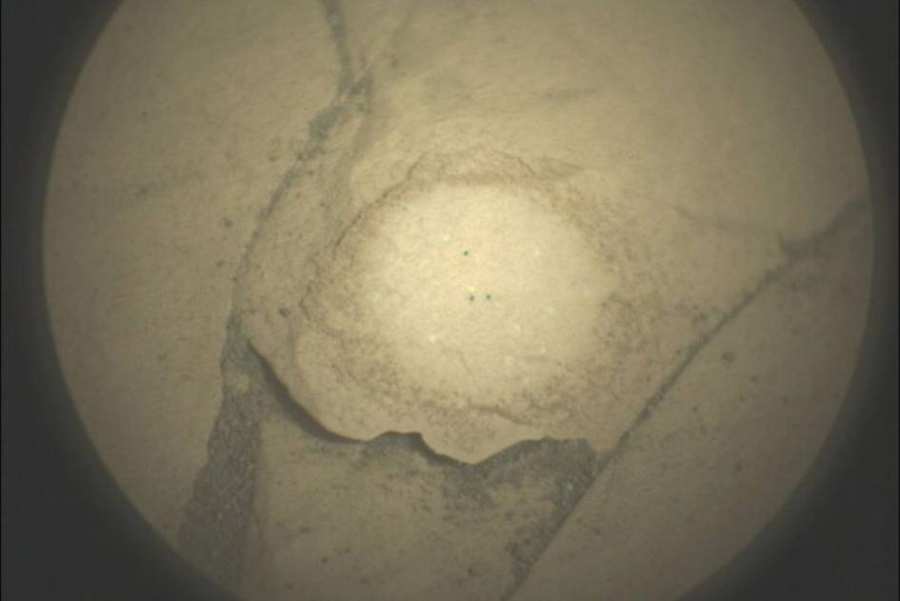
Mars – The Most Astonishing And Captivating Pictures Of The Red Planet
A human face on Mars
One of the fundamental motivations behind space exploration is to determine whether other forms of life exist in the vastness of the universe. David Bowie emblematically raised the possibility of life on Mars in the 1970s, and this image suggests that this hypothesis was not so fanciful. Indeed, some people seriously considered the prospect back in 1976. The photograph on the left was captured over 45 years ago by NASA’s Viking 1 orbiter, and it appears to depict a face-shaped Martian formation. This enigma has sparked debate about the possibility of a monument created by a possible Martian civilization. However, in 2001, the Mars Global Surveyor took the photograph on the right, revealing that the face was not what it appeared to be.
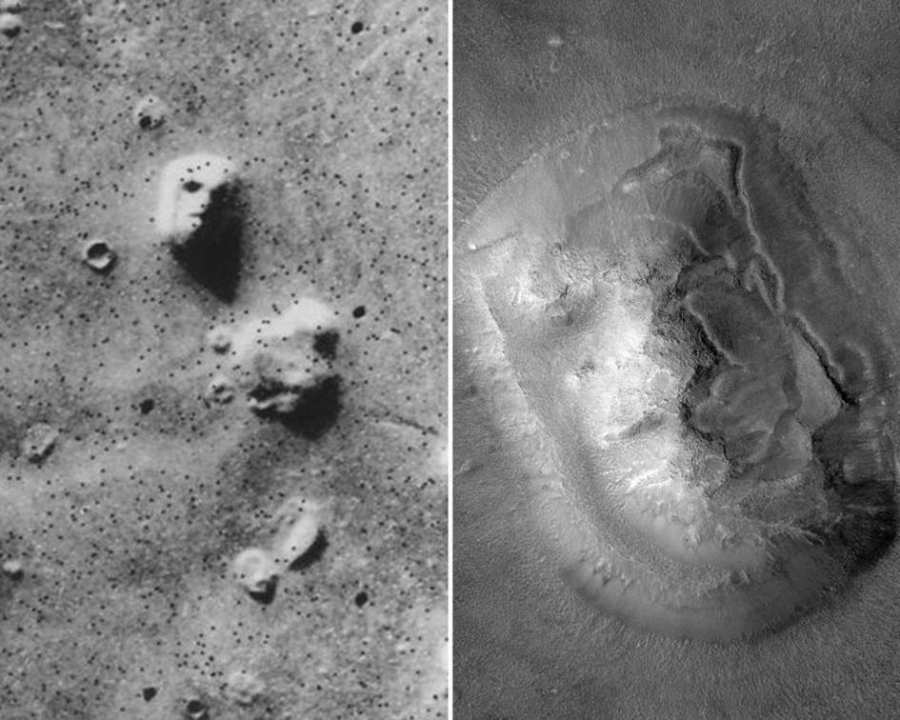
Une Forme De Visage Humain Sur Mars
Looks like a door
The existence of Martians remains an unresolved question, and there is as yet no formal proof of their presence. Space agencies have yet to confirm such facts. However, there are times when clues give the impression that traces of extraterrestrial life have been discovered on the Red Planet. In May 2022, it appeared that NASA had captured an enigmatic image, apparently depicting a gate on Mars. Such a discovery naturally raises questions about the possibility of life on this planet. However, as sometimes happens, appearances can be deceiving. It seems that this image is one of those cases where the angle of the shot created an optical illusion, and what was thought to be a door was actually just the result of the play of light and shadow.
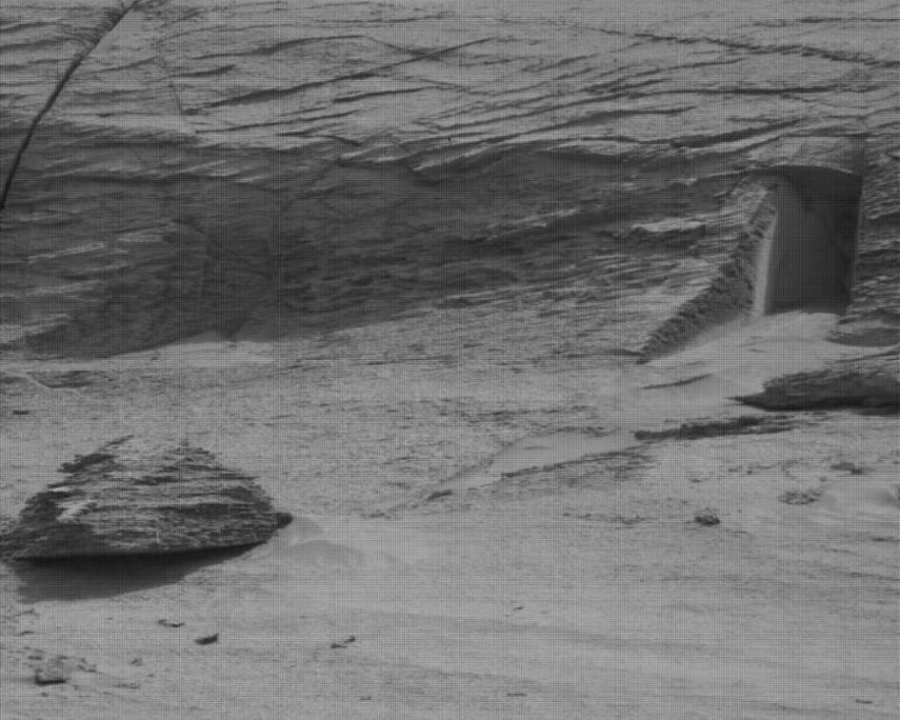
On Dirait Une Porte
An angel and a heart on the South Pole
December traditionally evokes feelings of love and innocence due to the festive season. So it’s fitting that, in December 2020, the European Space Agency captured an intriguing image. This photograph was taken at the south pole of Mars and appears to depict shapes reminiscent of an angel and a heart. Recognition of these shapes may vary from person to person, as they appear in part to be the result of a crater on the Martian surface. It’s plausible to attribute this Martian area’s resemblance to familiar symbols to mere coincidence. However, it is undeniably curious to see such similarities on another planet
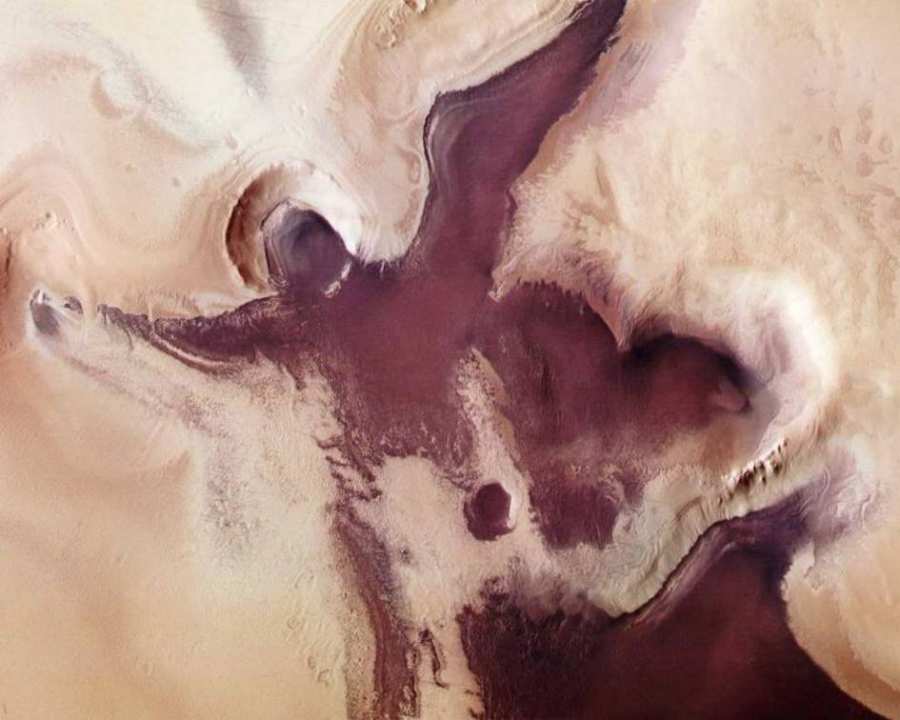
An Angel And A Heart On The South Pole
A mysterious crater leading to an underground cavern
Caverns are no strangers to Earth’s inhabitants. But that doesn’t mean they can’t have an unusual character. One of the most enigmatic images of Mars we’ve ever seen dates back to 2011, captured by the Mars Reconnaissance Orbiter. It appears to show a depression in the ground, with an opening leading to a possible underground chamber. According to NASA data, the hole in question measures almost 115 feet wide, while the underlying cavern extends for around 65 feet. At the time this photograph was taken, scientists were puzzled by the presence of a circular crater surrounding the hole. When NASA released this image nearly a decade later, uncertainty persisted regarding this mysterious Martian orifice and other aspects associated with this enigma.
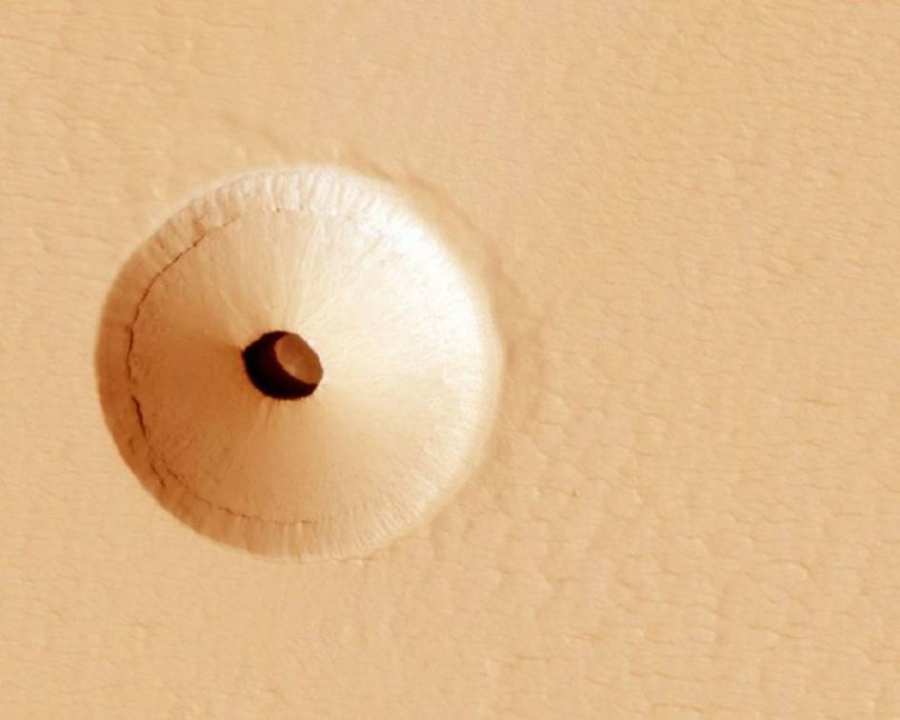
A Mysterious Crater Leading To A Subterranean Cave
It might look like a thigh bone
One of the most convincing methods of establishing the existence of life on Mars, or at least its past existence, would be the discovery of physical remains. The discovery of elements such as a bone would be decisive in proving that we are not the only living beings in the universe. So you can easily imagine people’s excitement when NASA unveiled one of these intriguing images of Mars. The photograph, captured in 2014 by the space agency’s Curiosity rover, appeared to reveal a thigh bone scattered among Martian dust and debris. This left room for speculation about the possibility of Martian life, or even a human presence on the Red Planet. Unfortunately, this time the reality was quite different. It turned out that this thigh bone was in fact just a rock, shaped by the erosive forces of time.
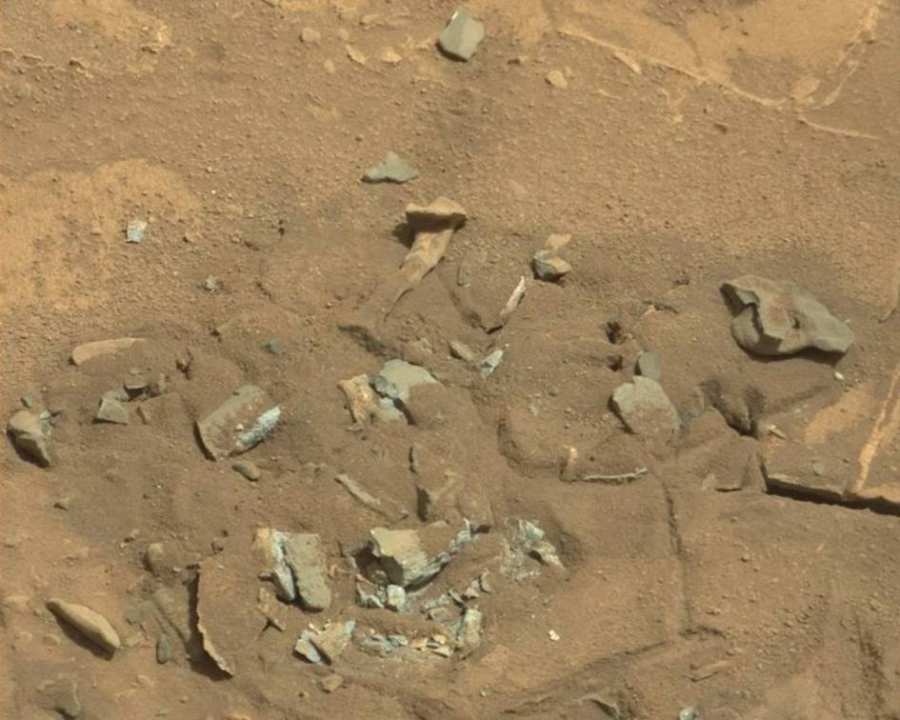
It Could Look Like A Thigh Bone
A strong resemblance to a brachiosaurus
Aliens aren’t the only entities some people dream of meeting. Dinosaurs have been the subject of intense interest for many years, and enthusiasts of these creatures have always been disappointed never to have seen them in person. However, even if we haven’t been able to see them alive, fossil bones have enabled us to imagine what these animals looked like, and so we can establish a certain resemblance to this rock. In April 2021, NASA’s Perseverance rover captured an image of a rock with a shape strikingly similar to that of a brachiosaurus. However, this discovery in no way suggests that dinosaurs walked on Mars in the same way as they did on Earth. While to some, dinosaurs may seem as strange as aliens, there is no evidence to suggest that they were capable of traveling between planets.
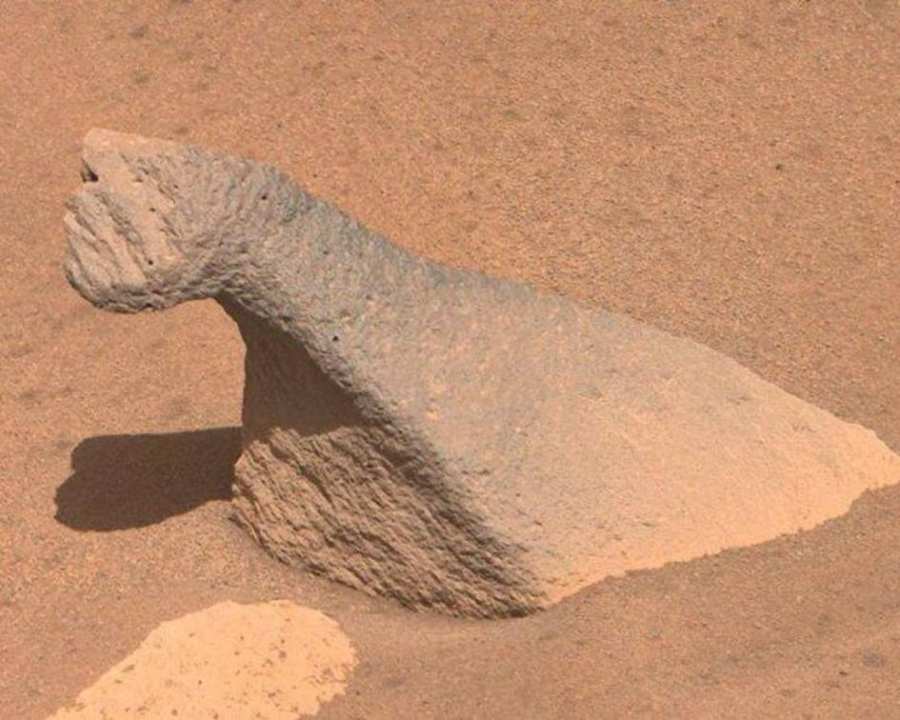
A Strong Resemblance To A Brachiosaurus
A bias in the Star Wars versus Star Trek debate
The debate over the superiority between ‘Star Wars’ and ‘Star Trek’ has been a feud between fans of both franchises for many decades. There’s no denying that ‘Star Wars’ and ‘Star Trek’ each have their merits and demerits, deserving of the praise they receive. However, it would seem that the debate has come to an end, thanks to an unexpected intervention from Mars. It seems that the Red Planet has officially declared its allegiance to ‘Star Trek’ by displaying the series’ famous logo on its surface. The image was reportedly captured by NASA’s Mars Reconnaissance Orbiter and revealed in 2019, much to the delight of many fans. After all, when a planet takes a stand in a science fiction debate, it can’t be ignored, can it?
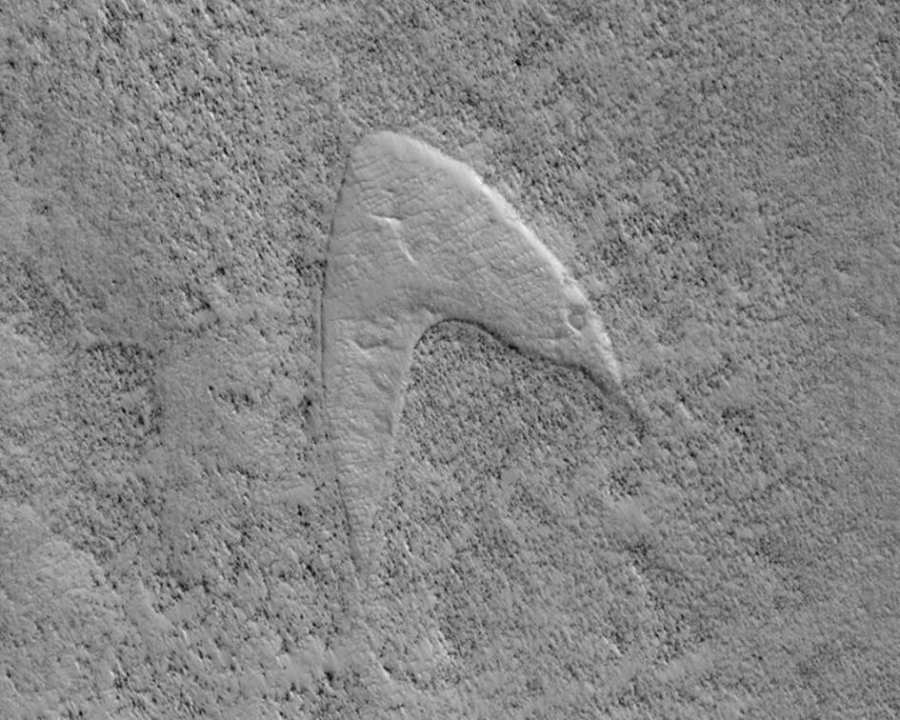
A Bias In The Debate Between Star Wars And Star Trek
The “spiders” of Mars
Do you know what we don’t want to find on Mars? Spiders. Arachnids are already a source of terror for many people on our own planet, so the idea of finding them elsewhere doesn’t arouse much enthusiasm. If we ever plan to colonize Mars, the last thing we need is to be confronted with more spiders to scare us. Fortunately, this is not the subject of the photograph in question. What NASA’s Mars Reconnaissance Orbiter actually captured in May 2018 was a geological phenomenon called araneiform terrain. This is a seasonal process resulting from the accumulation of carbon dioxide beneath the planet’s surface, which heats up and escapes, leading to the deposition of darker dust around the opening. It’s a phenomenon that doesn’t occur on Earth, and this image was taken during winter at Mars’ south pole.
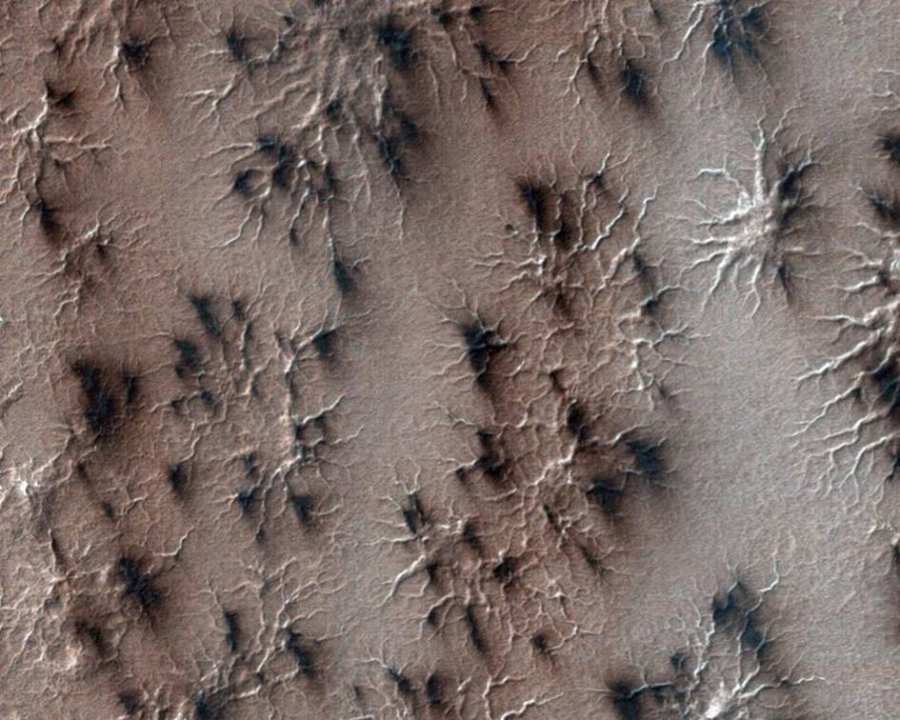
Les Araignées De Mars
An egg that isn’t an egg
The discovery of an egg on another planet would naturally give rise to the idea of the presence of some form of life. The question then arises as to whether we should wait for the egg to hatch. Who can say what might be lurking inside, or what creature might emerge in search of its egg? But human curiosity is hard to curb. Unfortunately, the object photographed by the Curiosity rover is not really an egg. Although it is called “Egg Rock”, this name comes from the Bar Harbor region of Maine. What’s more, its size is much smaller than the image might suggest, with NASA stating that it’s the size of a golf ball.
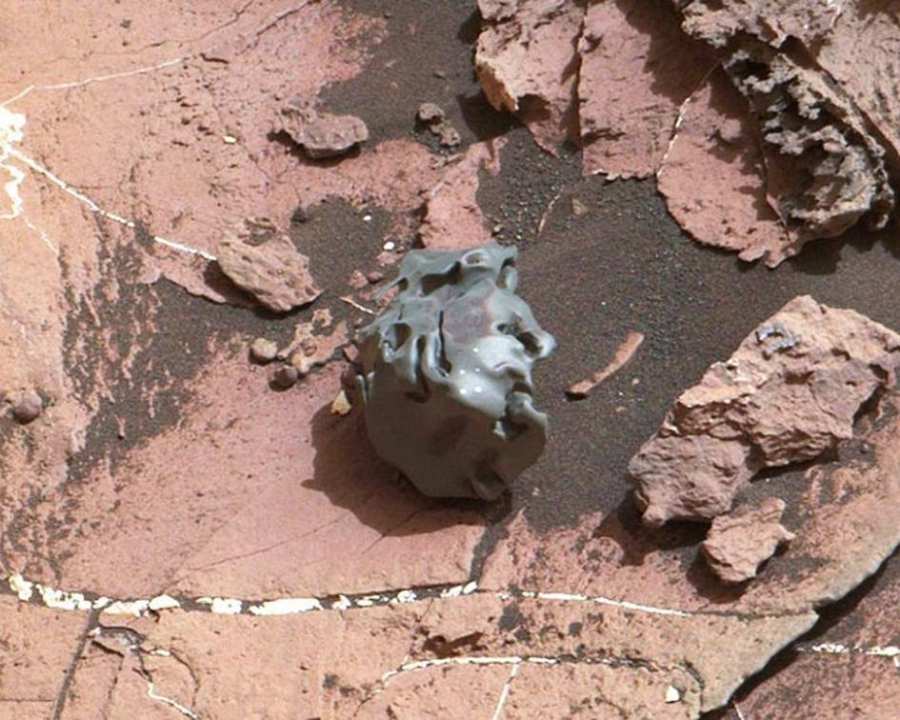
An Egg That Isn’t One
Dragon scales
The existence of dragons is still a subject of debate among some people, with devout believers claiming that these creatures are not purely figments of the imagination. However, it seems unlikely that such animals actually existed, and if they did, it’s indisputable that they no longer fly across our skies. The situation seems different millions of kilometers away, on Mars. Indeed, one of these enigmatic images of the red planet gives the impression of dragon scales. NASA itself used this terminology to describe the image captured by their reconnaissance probe. However, it appears that this phenomenon is simply the result of erosion. Although NASA is not yet certain how it happened, or what was responsible.
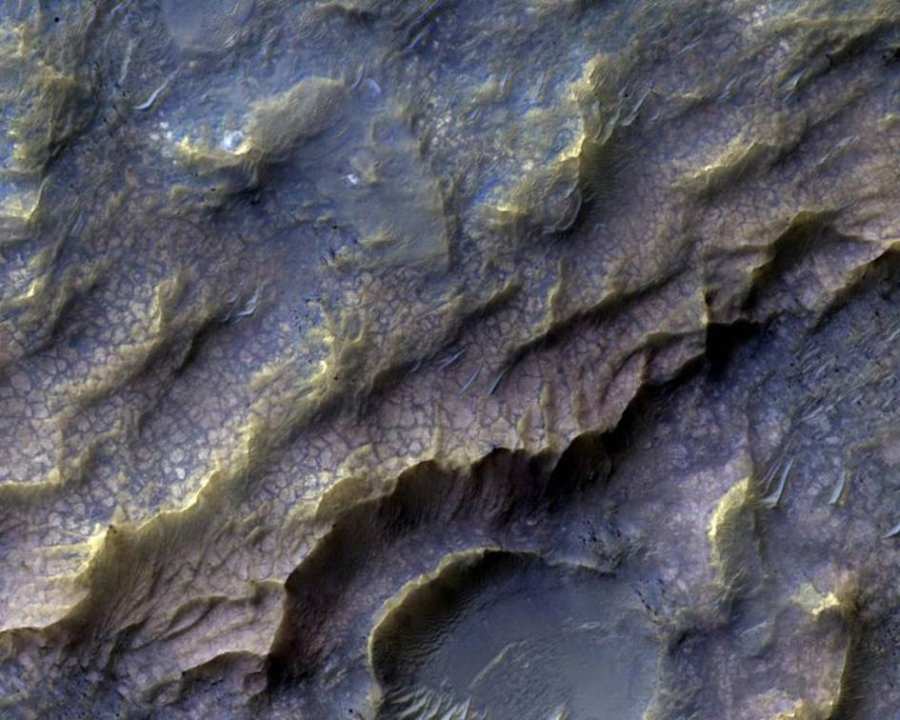
Des Ecailles De Dragon
Mars dust devils
Mars and Earth have very distinct planetary characteristics. However, as some of these unusual photographs of Mars reveal, there are remarkable similarities between the two worlds. One example is the presence of dust devils, which can vary considerably in size on both planets. On Earth, these dust devils have been responsible for property damage and, sadly, human death. However, on Mars, a planet seemingly devoid of life, dust devils don’t pose a similar threat. In fact, on Mars, they appear to play a beneficial role, helping to clean the solar panels of the planet’s various rovers. It’s heartening to see that natural phenomena on Mars can sometimes prove more useful than constraining.
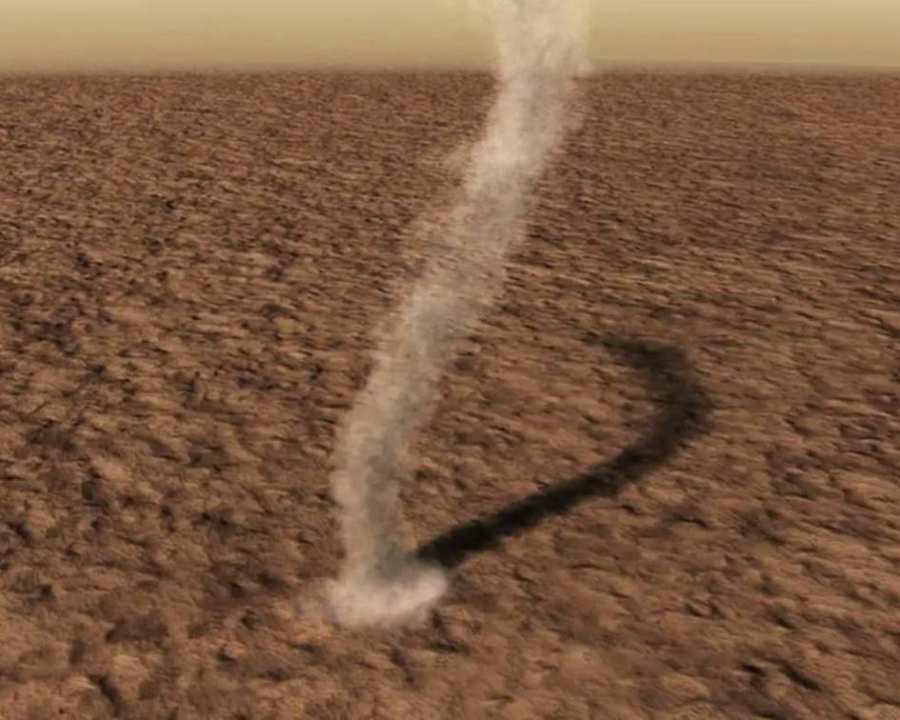
Dust Devils On Mars
Rocks on Mars, nicknamed “blueberries”
If you’re feeling hungry, it’s probably best not to currently be on Mars, as you could easily mistake these rock formations for blueberries. These hematite-rich spherules are named after the fruit because of their similar appearance. They were photographed by NASA in 2004 when their rover was exploring the Fram crater on the Red Planet. As with many of these intriguing images of Mars, the size of the captured objects is deceptive. Although they may appear as large as average-sized pebbles, NASA revealed that the area shown in the image is actually only 1.2 inches in diameter. These “blueberries” are therefore small enough to be swallowed, although this is certainly not recommended.
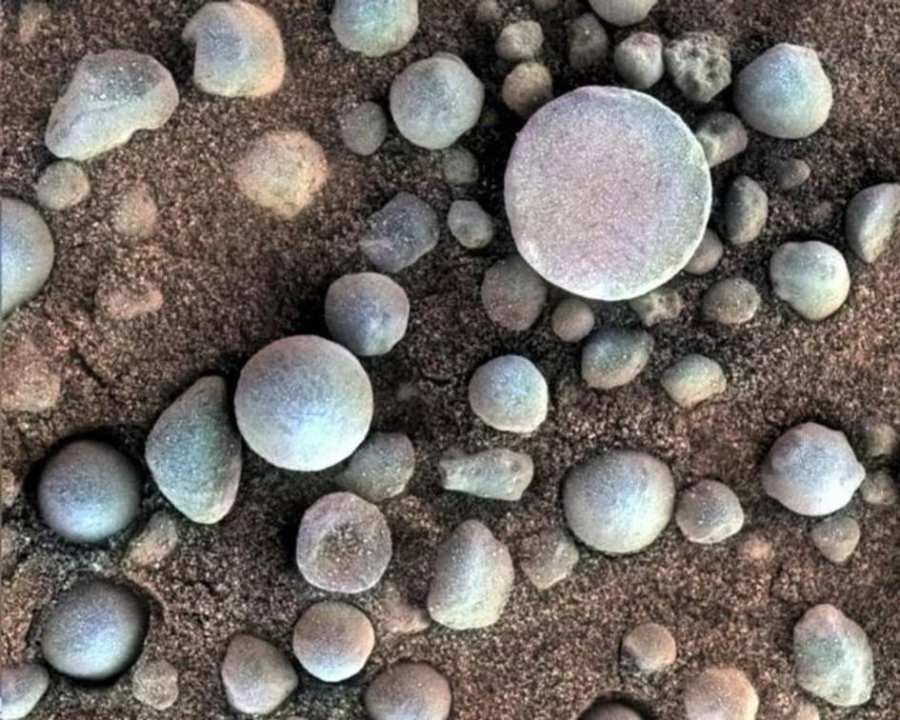
Rocks On Mars, Nicknamed Blueberries
Like the statue in the British Museum
It’s fascinating how some of these enigmatic images of Mars can really intrigue us. When people were first exposed to the image on the left, some were convinced they’d seen it before. They quickly drew a parallel between the rock formation and a Neo-Assyrian divine figure on display at the British Museum. The similarity was so striking that it prompted speculation that Martians might have borrowed the statue or recreated it in the image of earthly creations. Some even questioned the possibility that Mars’ Opportunity rover had never actually left our planet. However, it turns out that this resemblance was actually just another example of how light and shadow can deceive our senses.
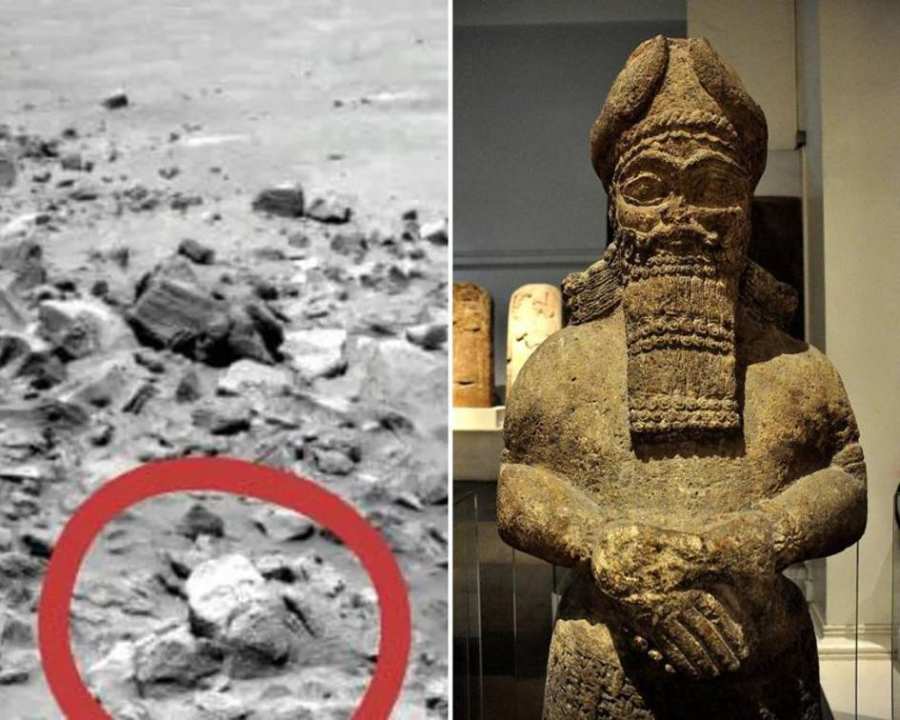
Like The Statue At The British Museum
The origins of Pac-Man
Have you ever wondered about the setting for the famous arcade game Pac-Man? You might think that the game has no specific location, since it’s just shapes on a black screen. However, the next unusual image of Mars gives the impression that Pac-Man could have been evolving on the red planet. At least, it’s a fun idea to consider. Looking at this photograph of a crater, taken by NASA’s Mars Reconnaissance Orbiter, it’s hard not to identify a resemblance to Pac-Man in the center. Unfortunately, this resemblance is not the proof some of us would like it to be. It’s simply the result of the formation of a crescent-shaped sand dune, located inside an impact crater. Ultimately, this means we won’t be lucky enough to come across a Pac-Man roaming the surface of Mars.
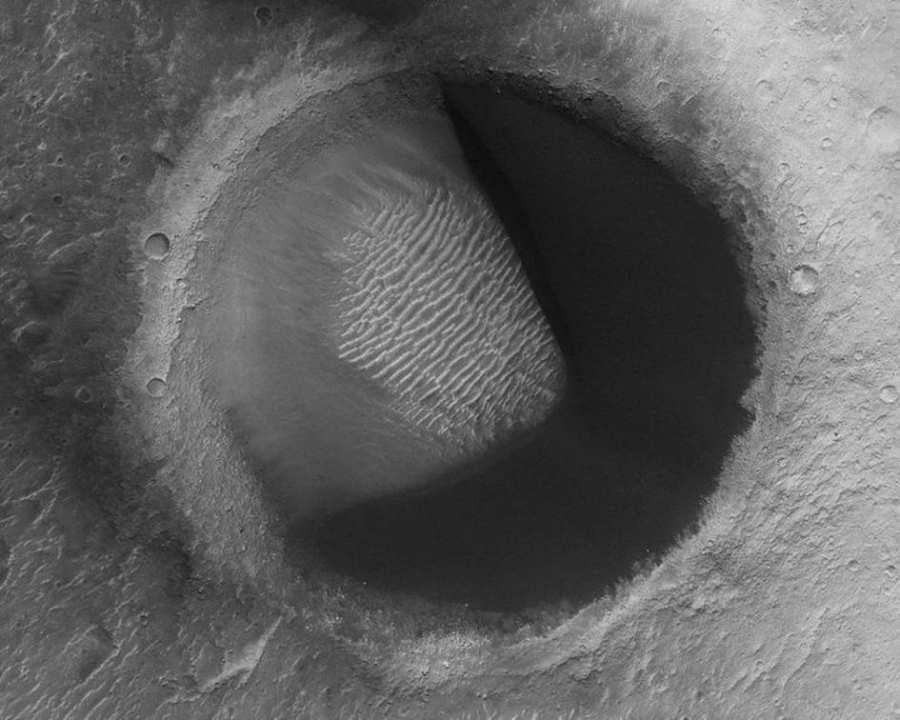
The Origins Of Pac Man
The sky over Mars
Not all these amazing photos of Mars were taken from the planet’s surface. There have been times when NASA rovers have directed their gaze skyward, offering a perspective of what Martians might see if they existed. Apparently, it’s a remarkably beautiful vision. This was particularly evident in March 2021, as this image shows. The Curiosity rover captured these glittering clouds, which seem to result from the near-uniformity of the size of the particles they contain. At least that’s what atmospheric scientist Mark Lemmon claims, explaining that this uniformity occurs “just after the clouds formed” and that the particles “all grew at the same speed”. An evening of stargazing with a view like this certainly wouldn’t go amiss
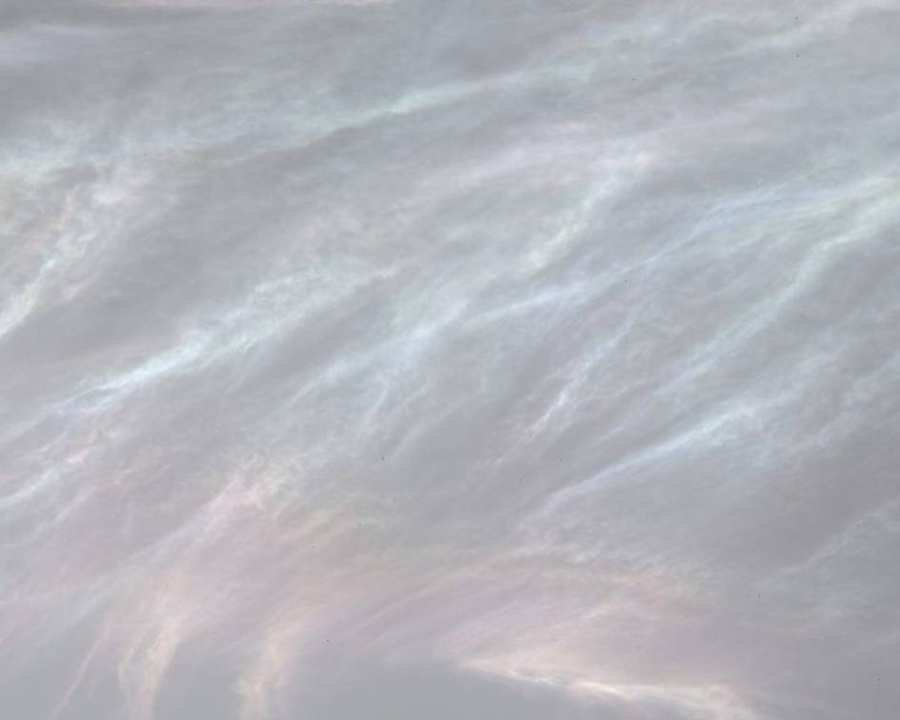
Le Ciel De Mars
The face of Mahatma Gandhi
There appear to have been several incidents in which people have claimed to have seen faces on the surface of Mars. Another such case occurred in 2009, during the launch of Google Mars, a mapping program that uses satellite images collected by space agencies to enable users to explore the planet. Using this platform, Matteo Ianneo ended up discovering what appeared to be the face of Mahatma Gandhi. At least, that’s what he saw, as did several other people, when they observed this formation on the planet’s surface. The resemblance to a human facial profile is undeniable, explaining why people have made a connection with Gandhi. However, this is simply a case of pareidolia, a phenomenon where people see faces where they don’t actually exist
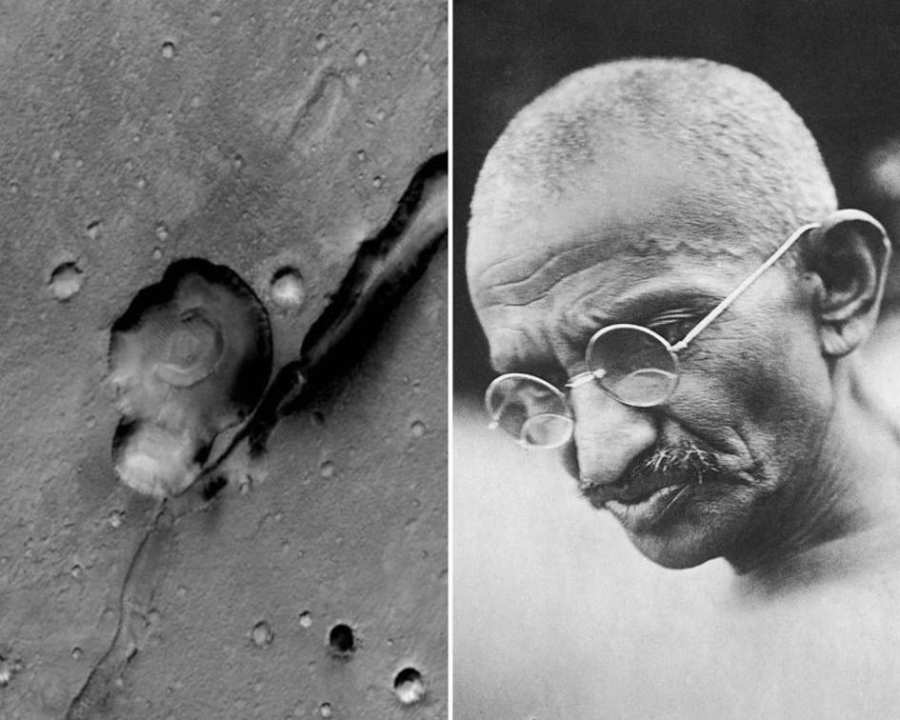
Mahatma Gandhi’s Face
It looks like a floating spoon
An additional indicator that could suggest the past or present presence of life on Mars would be the discovery of tools or utensils. If NASA or other space agencies were to find objects resembling cutlery on the Red Planet, it would be hard to argue with the possible existence of life. So why isn’t this photograph recognized as convincing evidence? Unfortunately, the apparent spoon in this image is actually a rock formation. It’s a rather unusual rock formation, as it appears to float above the ground. This is due to the different gravity of Mars, which allows fragile formations to resist better than on Earth.
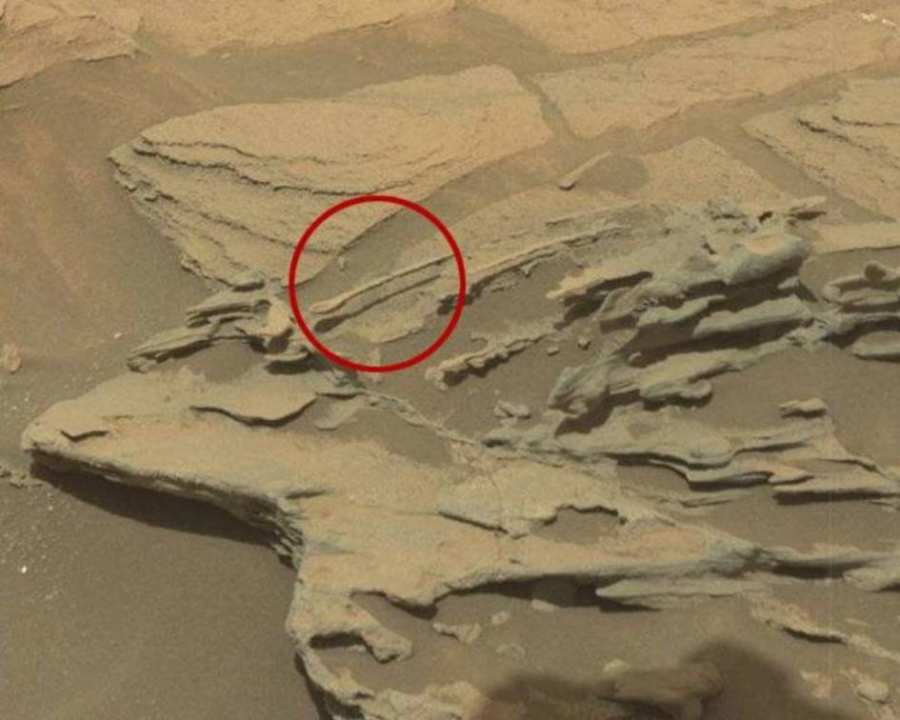
It Looks Like A Floating Spoon
Mars’ South Pole is a little different from what we see on Earth
On Earth, we’re used to thinking of the polar regions as cold, and it seems that the situation is similar on Mars. Temperatures on the red planet can apparently drop as low as -238 degrees Fahrenheit, conditions that our bodies certainly couldn’t tolerate. However, there’s much more to Mars than its climate, as this exceptional image demonstrates. We could easily call this one of the most unusual photos of Mars, as it appears to show a close-up of bacteria. In reality, it’s a view of the planet’s south pole, captured by the Mars Reconnaissance Orbiter probe in 2016. The polar cap is mostly composed of carbon dioxide, and the circular pits seen here are actually cavities in the dry ice.
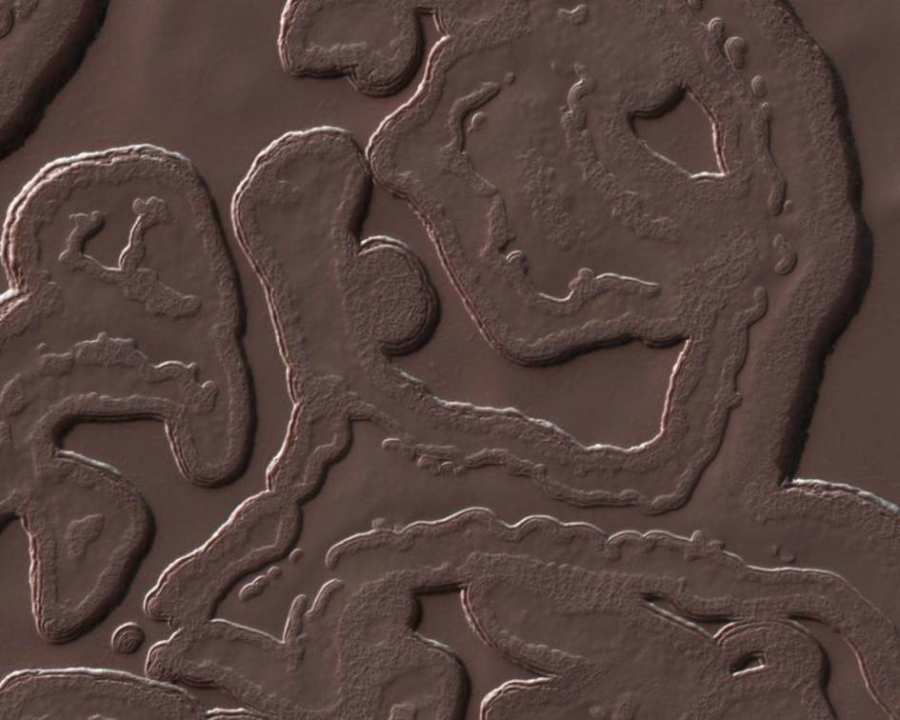
Mars’ South Pole Is A Little Different From What We See On Earth
A crater that looks like a frog swimming on the surface
There’s no denying that Mars is littered with craters. On Earth, we’ve also had our share of craters over the years, but they’re not as visible due to our planet’s constant geological activity. However, we could be missing out by not having as many craters, given the unusual shapes they can present. Another remarkable crater on Mars is one discovered several years ago by NASA’s Reconnaissance Orbiter. It evokes the image of a frog floating on the surface, with an unusual feature: a tail, an element not frequently encountered among craters. This curious appearance is apparently the result of water flowing outwards from the crater, rather than the other way round
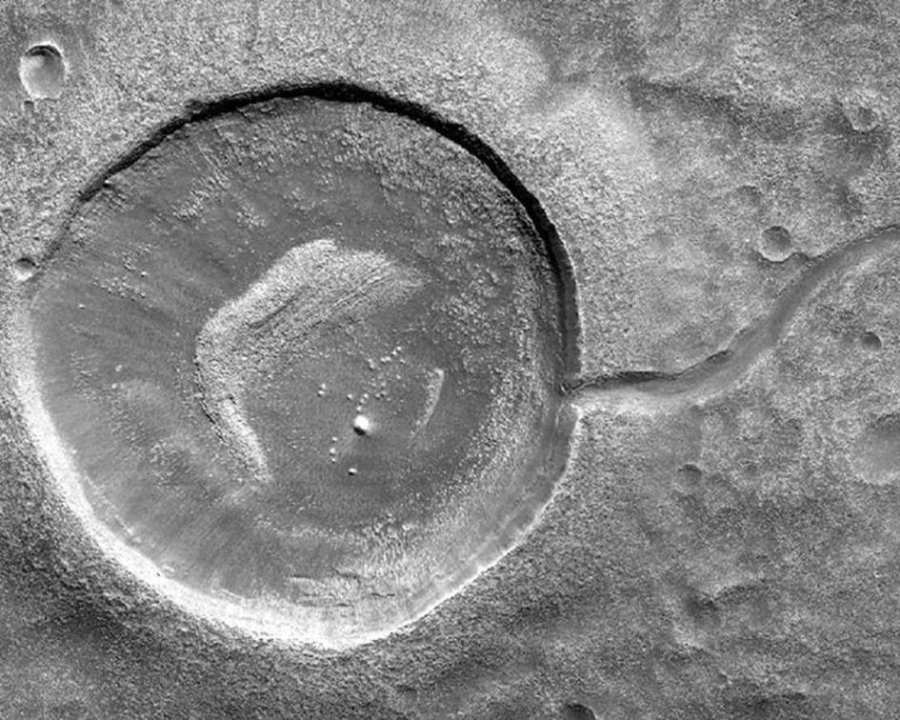
A Crater Resembling A Frog Swimming On The Surface
For once, a huge blob might actually be what it appears to be
As these strange images of Mars have shown us, much of what you see on Mars is not what it seems. However, this appears to be one case where what you’re looking at really is authentic. It looks like something splashed against the planet’s surface, and that’s apparently what really happened. Apparently, something hit the southern ice cap of Mars in 2019 and broke through the ice. In doing so, a quantity of dust would have been blown out of the hole, causing the splash effect we can see here. NASA’s Mars Reconnaissance Orbiter apparently captured the image, as with many of these other unusual photos of Mars.
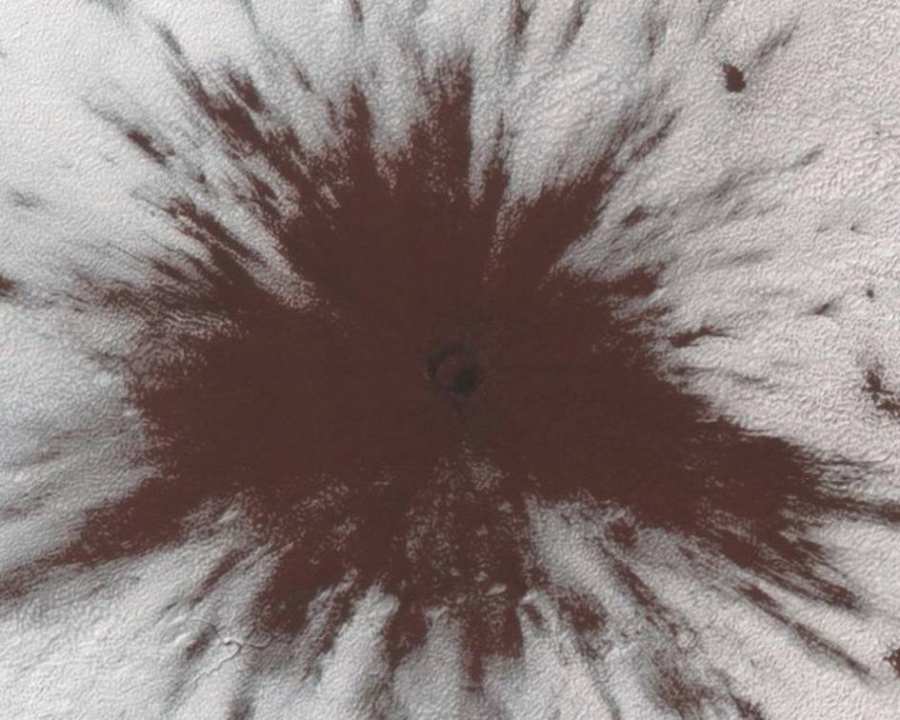
For Once, A Huge Task Would Be Just What It Seems
A cannonball?
If Martians lived on Mars, do you think they’d go to war? We suppose it’s not impossible. After all, humans have done it many times over the centuries, and conflicts are always likely to emerge between life forms. Some even believe there has already been a war on the planet, judging by this image. This was captured by NASA’s Curiosity rover and apparently caught the attention of some UFO enthusiasts in late 2017. They apparently thought the spherical object in this image was a cannonball left over from a war. However, NASA downplayed this suggestion on social networks, pointing out that the alleged cannonball is only 0.2 inches long.
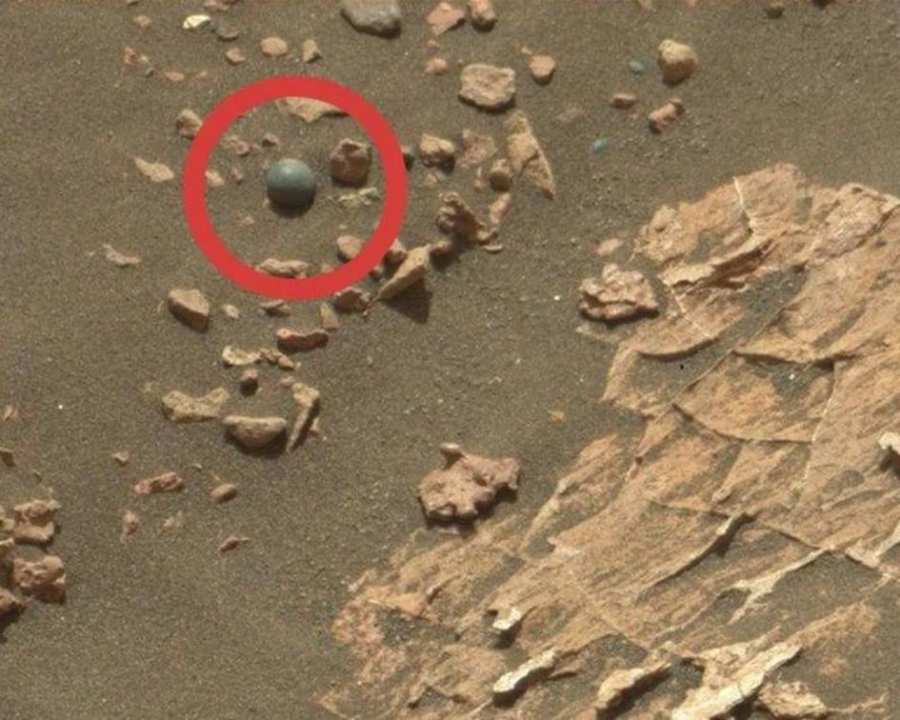
A Cannonball?
The ice-filled Korolev crater
We may not know if there’s life on Mars, but water is another story. It’s not that long since we learned this revelation, with new discoveries emerging over the years. For example, in 2020, it was confirmed that there were apparently several large saltwater lakes around the planet’s south pole. They are under the ice, however. This combination of water and ice makes for spectacular views, like this one at Korolev Crater. Throughout the year, this crater is apparently home to a 1.1-mile-thick mountain of water ice. It stays here because the crater acts as a cold trap, with the position of the ice creating a protective layer of cold air.
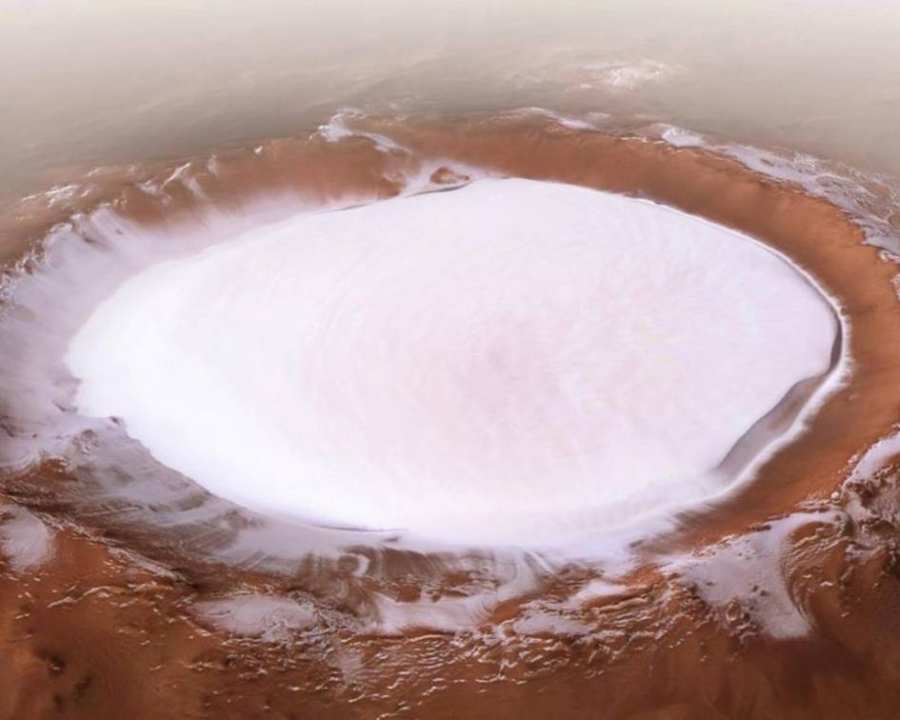
Korolev Crater Filled With Ice
A perplexing rock
We know that Mars is home to some oddly-shaped rocks. However, it’s not always the shape that makes a rock on the Red Planet remarkable. Sometimes, it’s the simple fact that they look so different from what we’re used to that makes them remarkable. After all, would you expect to encounter something like this on Earth? The rock is said to have been photographed by NASA’s Perseverance rover in March 2021, becoming one of its first major discoveries. People aren’t exactly sure what it is, whether it’s a piece of weathered rock or something that came loose from an impact event. There’s a chance it could be a meteorite, which would be pretty incredible.
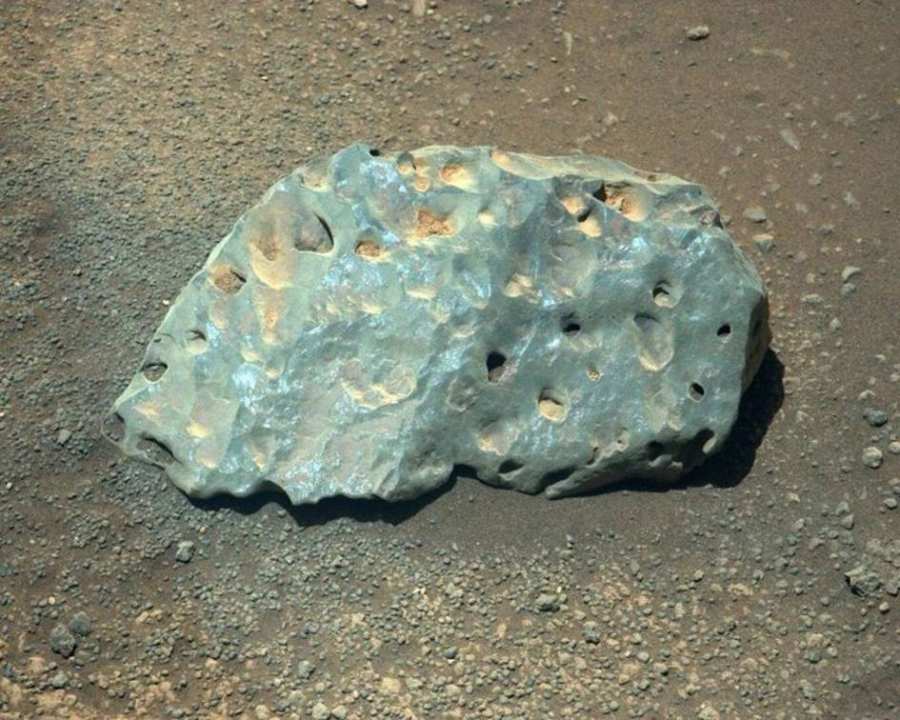
A Rock That Really Leaves One Puzzled
Blue sunsets
For many people, there are few moments more romantic than a sunset. When the sun dips below the horizon and the sky is adorned with a magnificent blend of colors, it’s hard not to be captured by the beauty of the moment. However, we’re not sure anyone would be equally captivated by a sunset on Mars. Although the planet itself can sometimes take on hues similar to those of a sunset, it seems that things take on a much bluer hue at dusk. This is due to Martian dust particles, which are larger than the gaseous particles found on Earth. These particles have the property of dispersing red wavelengths, which explains why Martian sunsets tend to display blue tones, while the daytime sky takes on red hues.
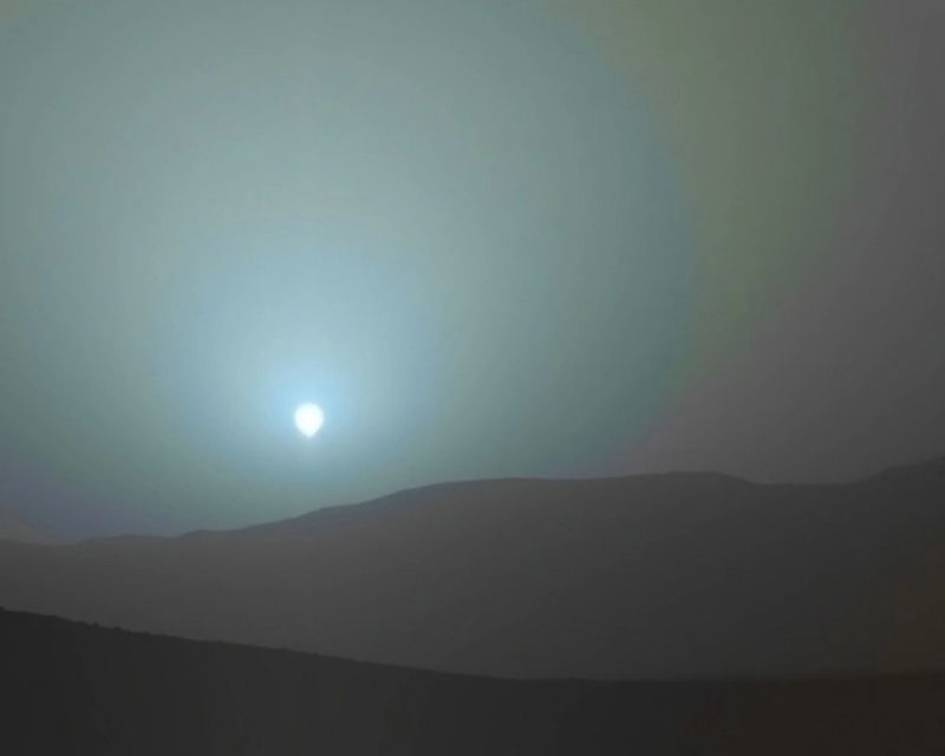
Blue Sunsets
Rocks like flowers
As amazing as it is to explore Mars, we imagine you’d run out of things to see pretty quickly. After all, the Red Planet is pretty barren. So, while these strange images of Mars may reveal some incredible sights, they’re rare. There isn’t even any plant life here, as nothing can grow in these conditions. Of course, while there may be no flowers, that doesn’t mean there aren’t formations that give the appearance of flowers. In February 2022, NASA’s Curiosity rover captured this image of a rocky artifact that looks like a dust-covered flower. Unfortunately, it’s just another misleading rock that’s also smaller than a coin
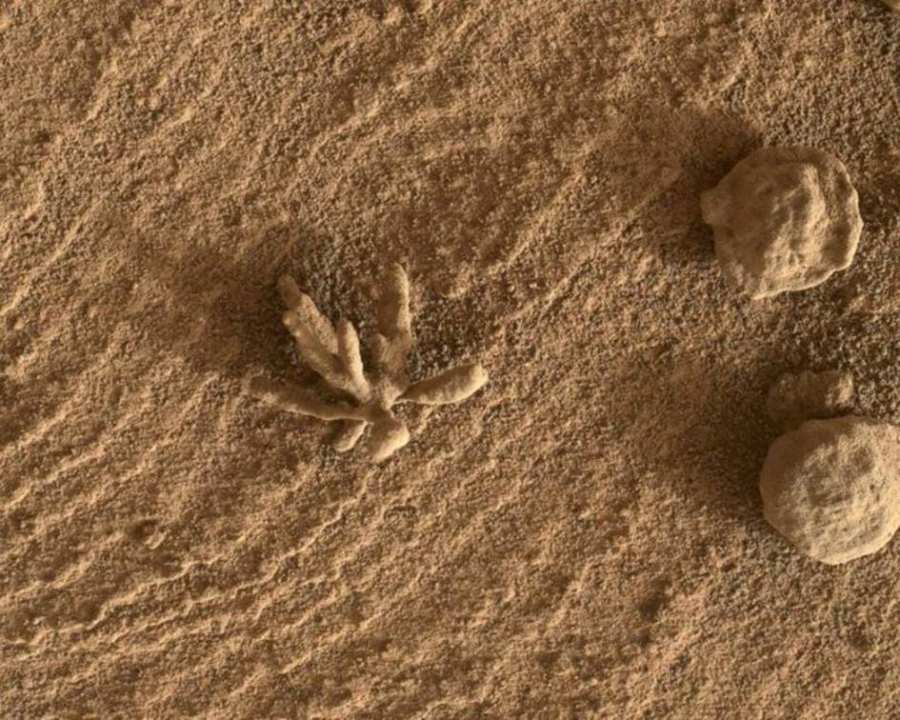
Des Roches Comme Des Fleurs
A potential volcanic eruption on Mars
One thing that Earth and Mars apparently share is volcanic activity. We know that volcanoes exist on Earth and have seen how much damage they can cause when they erupt. This is far more significant than if it happened on Mars, where there would apparently be no life forms affected by it. However, this doesn’t mean that volcanic eruptions here don’t do anything remarkable. The next of these unusual images of Mars reveals what may well be a 50,000-year-old (or less) volcanic eruption site. According to one research team, the “mysterious dark deposit” in this photo – which is apparently slightly larger than Washington D.C. – could be a volcanic deposit.
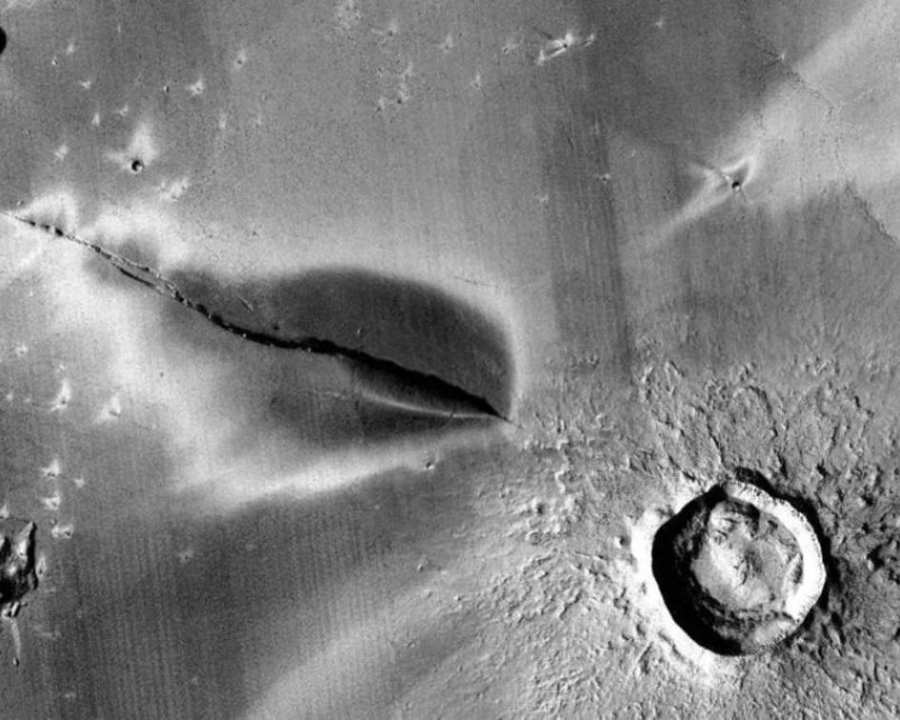
A Potential Volcanic Eruption On Mars
Water drops on Mars?
The fact that there could be water on Mars doesn’t mean that the planet experiences rain as it does on Earth. In fact, it seems an incredibly long time since Mars experienced such a phenomenon, which could explain why it’s so dry and dusty here. Of course, while there may be no rain, that doesn’t mean there are no raindrops. It seems that NASA has already captured an image of some of the dunes around the Copernicus crater, and it’s hard not to see them as raindrops. Curiously, their existence is actually linked to the lack of rain. That’s because they’re rich in olivine, a mineral that isn’t found much on the Earth’s surface because it quickly turns to clay when exposed to water.
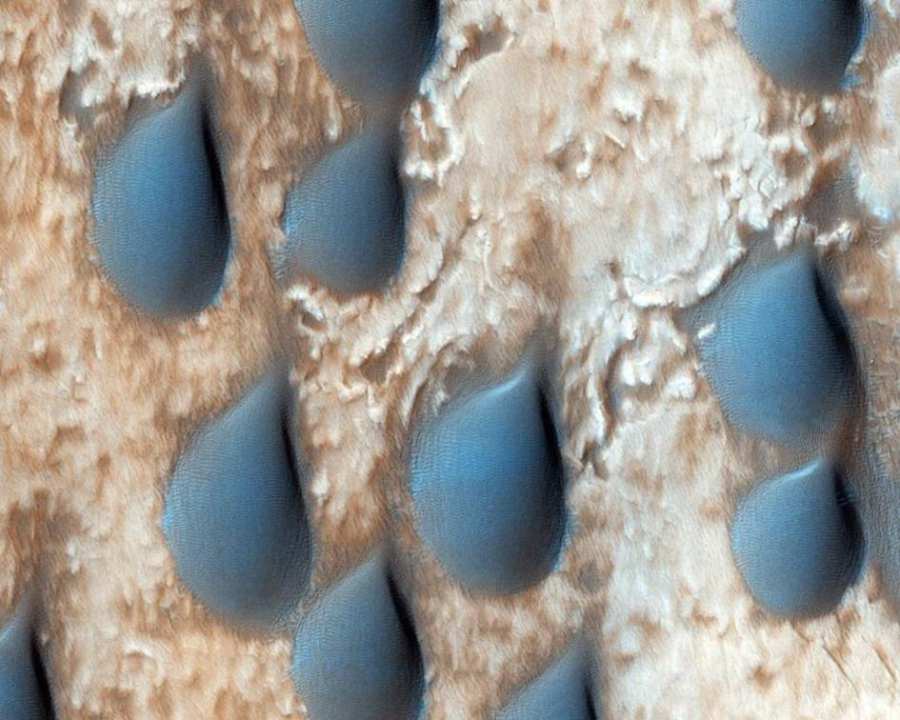
Des Gouttes D’eau Sur Mars?
It looks like a gigantic hairy spider, but..
What is it with Mars and spiders? We’re beginning to think there are hordes of these creatures lurking beneath the surface of the Red Planet. We don’t know which is worse – a bunch of little spiders or a gigantic hairy spider, to which people have compared this discovery. It was apparently captured by the European Space Agency in 2021. Scientists say that while it may look like a spider, it’s really just a smeared pattern created by a ton of dust devils. Apparently, as many as thousands of dust devils could have formed in this area and created the pattern you see here. Although they look blue, they’re actually dark red on the surface.
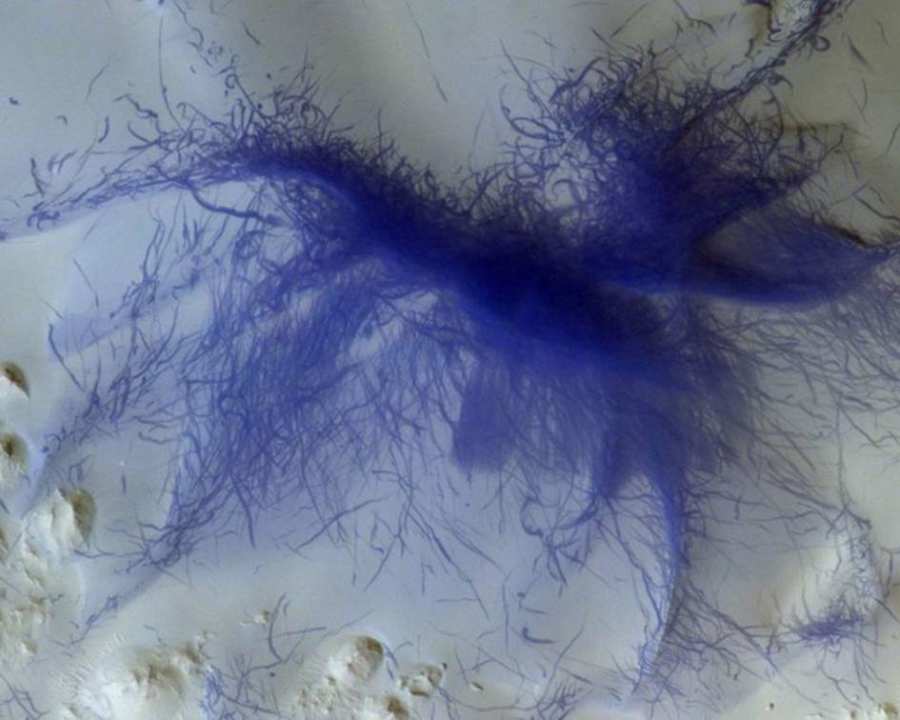
It Looks Like A Gigantic Hairy Spider But…
Like a pouting face
It seems we’re beginning to wonder whether these alleged faces on the surface of Mars are nothing more than the product of pareidolia. It’s conceivable that someone could see a face where there isn’t one, once or twice, but now it almost seems to be getting out of hand. However, despite appearances, it’s important to note that these rock formations are in no way intentionally designed to resemble human beings. The following unusual sight was captured by the Curiosity rover in 2016 and is nicknamed by some a “kiss.” This designation derives from the light and shadow effect that seems to reveal a face with a pinched eye, nose and lips. It’s likely that if this rock were viewed from a different angle, it would take on a very different appearance.
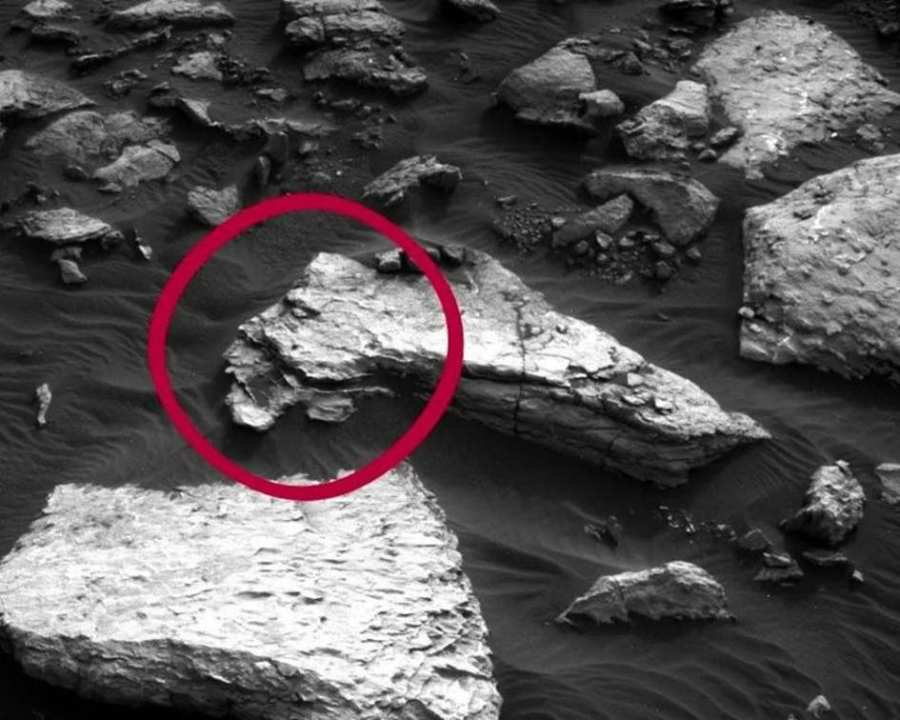
Comme Un Visage Qui Fait La Moue
Avalanches on Mars, but no snow
We’re all familiar with the concept of avalanches. If you live in a mountainous region where snow is abundant, you’ve probably already witnessed an avalanche. However, it turns out that Mars is another planet that also experiences avalanches, although these differ slightly from those we experience on Earth. After all, the Red Planet doesn’t experience snowfall like our planet. On Mars, avalanches are mainly made up of dust, as appears to be the case in this image captured on the planet’s surface by NASA’s Reconnaissance Orbiter in 2010. The space agency revealed that this phenomenon generally occurs around April and May. If it’s not a dust avalanche, it’s most likely linked to “falling frost composed mainly of carbon dioxide”.
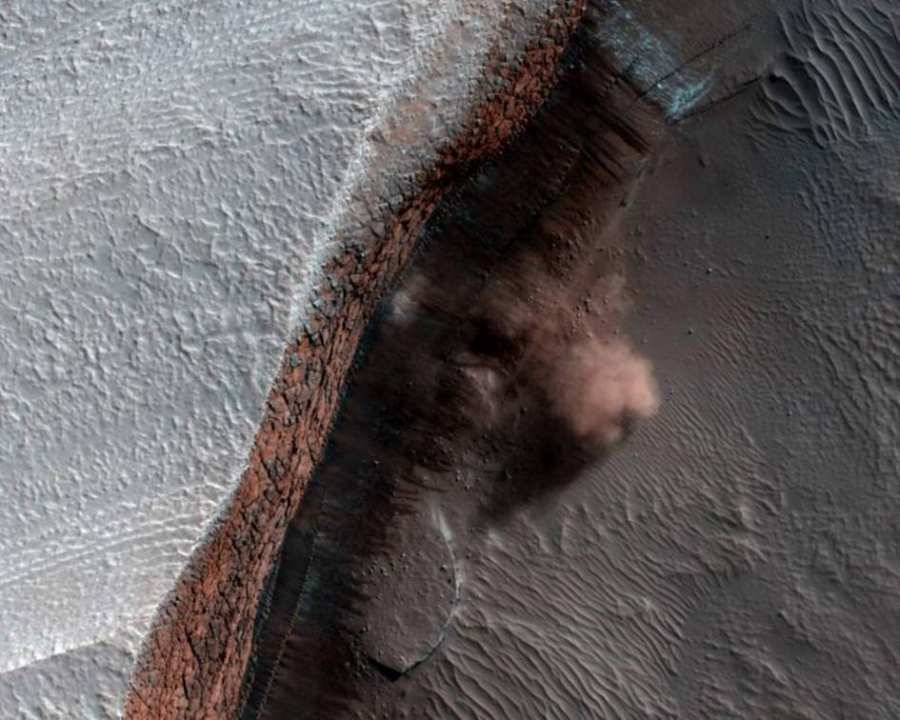
Avalanches On Mars, But No Snow
Zen art” accidentally created on Mars
When life becomes stressful, it’s crucial to seek inner peace. Zen gardens are one way in which many people achieve this state, emphasizing naturalness and simplicity to help find inner serenity. Although these gardens are mainly associated with Japan, they can also be found in other parts of the world. It turns out that this harmony even exists on other planets. In May 2022, the Twitter account of NASA’s Perseverance rover on Mars shared an image it described as “accidental Zen art”. This view probably resonated with those who appreciate the raked sand and rocky landscape so characteristic of Zen gardens. We hope this image brought a little peace to those who contemplated it.
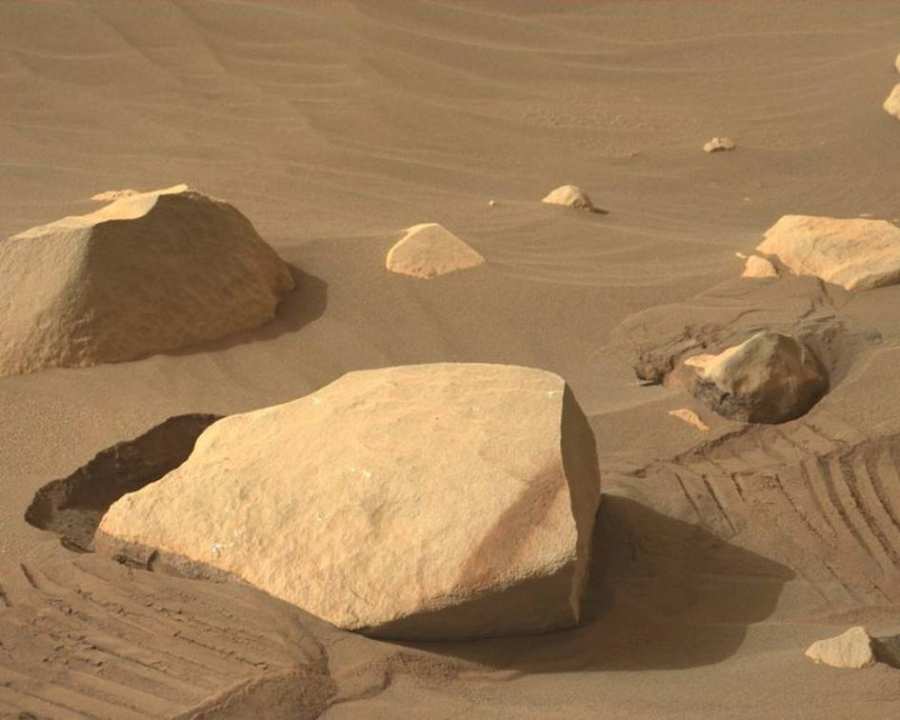
Of Zen Art Accidentally Created On Mars
A rock in the shape of a robot boot
It’s legitimate to wonder whether even the experts at NASA and other space agencies feel the same perplexity as we do when confronted with some of these images. These unusual photos of Mars can sometimes make it difficult to identify objects as anything other than what appears at first glance. For example, consider this rock that appears to be shaped like a robot boot. In 2019, many people were convinced that this was the case when they first saw this image. The shape of this rock does indeed evoke that of a robot boot, which may explain why some people may have concluded that it belonged to a robot. However, once again, it was simply a rock with a peculiar shape
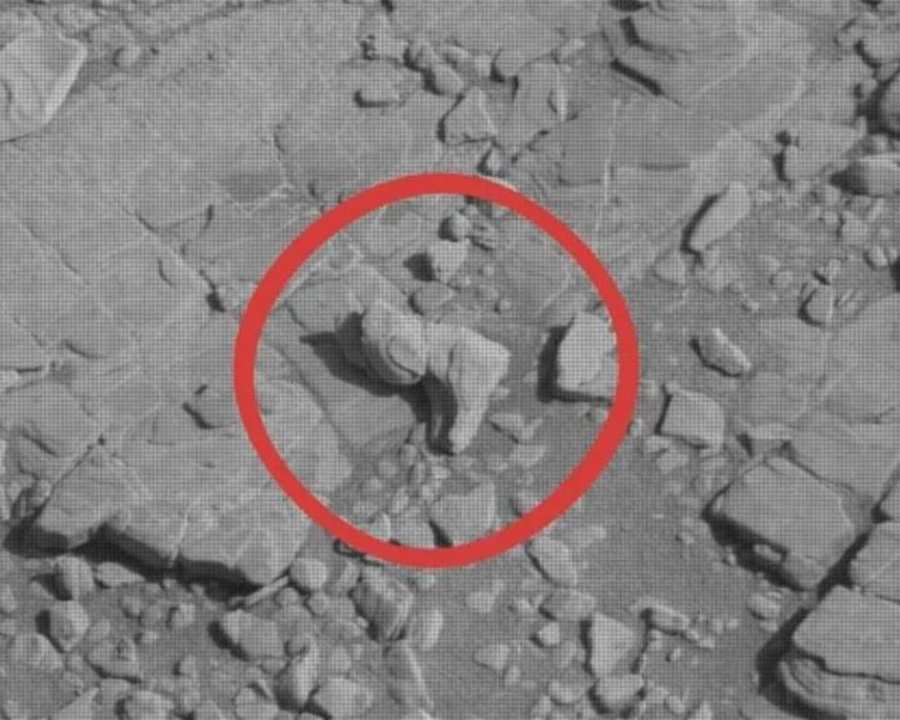
Un Rocher En Forme De Botte De Robot
This South Pole formation looks like Mr. Peanut
As we take a closer look at the South Pole of the Red Planet, it becomes harder and harder not to be struck by the resemblance to bacteria. Some of the strangest images of Mars come from precisely this region, and this is apparently the result of processes involving the sublimation and condensation of carbon dioxide. These phenomena have the effect of widening or filling depressions, and they occur particularly on steep slopes and flat areas, giving rise to curious formations. Some have compared the shape of one of these formations to that of Mr. Peanut, noting that it resembles the beloved mascot carrying a baby peanut. The analogy seems apt, especially as Planters made the decision to retire the character in 2020 and replace him with a baby peanut.
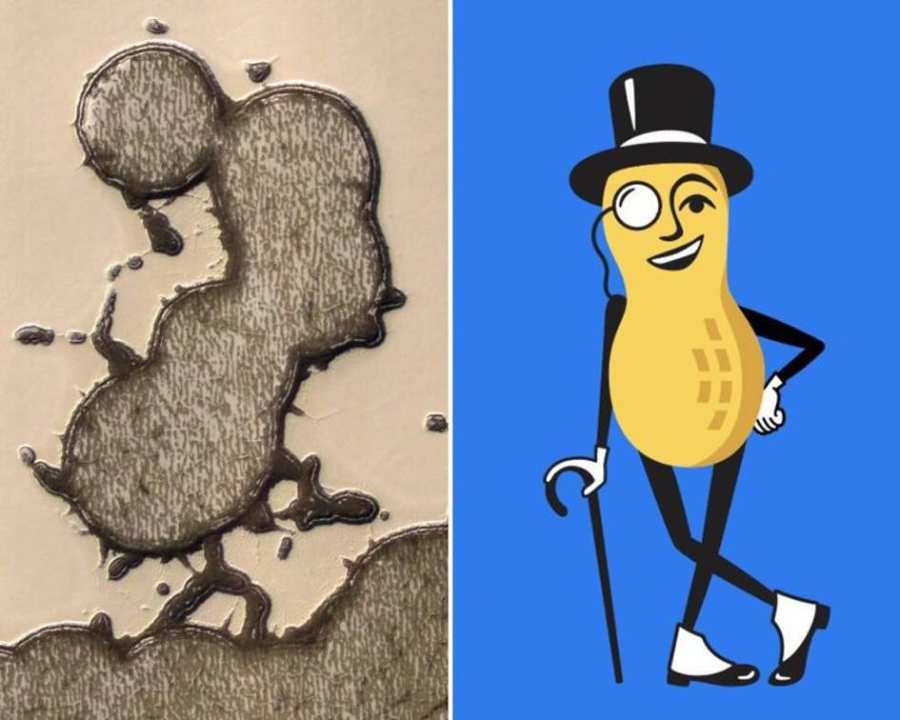
This South Pole Formation Looks Like Mr. Peanut
The precarious orientation of rocks due to gravity on Mars
It’s remarkable how different gravity on Mars can shape the landscape in surprising ways. On Earth, it’s unlikely that you’d see a rock perched as precariously as the one shown here, as the force of gravity would have quickly precipitated it towards the ground, altering such an extraordinary natural spectacle. Fortunately, it seems that there is currently no threat of such a fall on Mars. However, in the long term, the rock could eventually detach from its perch due to meteorological and wind erosion, which in all likelihood contributed to the formation of this exceptional structure in the first place. The same principle applies to the snake-head rock on the right of the image
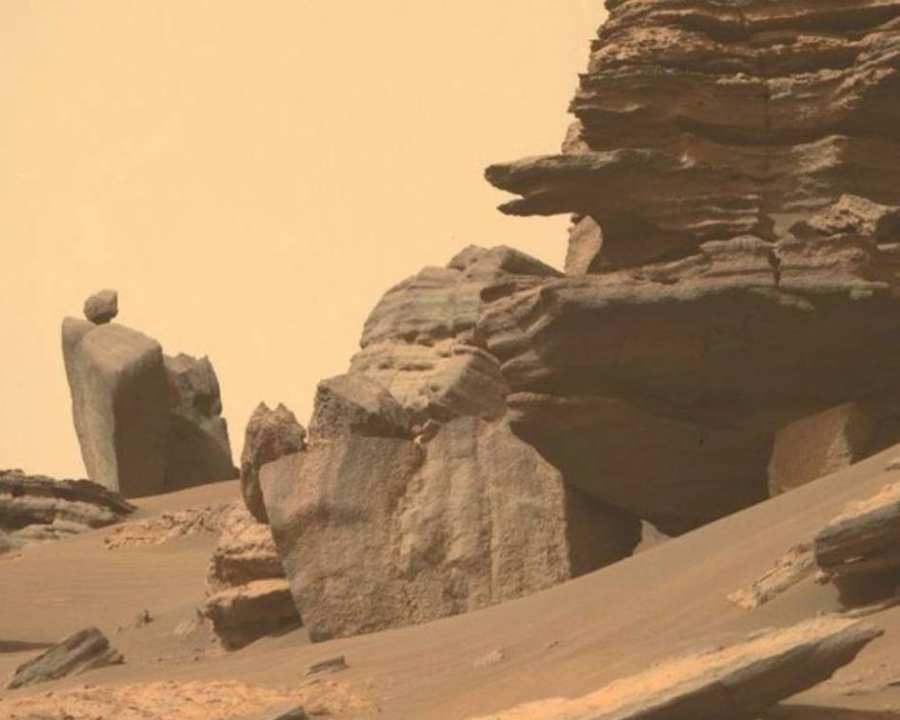
The Precarious Orientation Of Rocks Due To Gravity On Mars
The sudden appearance of an object on Mars has caused much confusion
Most of these unusual images of Mars stand out for the remarkable weirdness of what they represent. However, in the case of the following image, it’s not so much the object itself that’s fascinating, but rather the mystery of its appearance in this precise spot. After all, it was nowhere in sight before, so how did it suddenly appear in front of the camera? According to NASA, there is a simple explanation for this phenomenon, similar to that which applies to all the other strange photos of Mars. It seems that it didn’t appear out of nowhere, but was, in all likelihood, moved by the Opportunity rover as it rolled over it. Thus, it is unlikely that this object is a jelly doughnut, as some initially speculated.
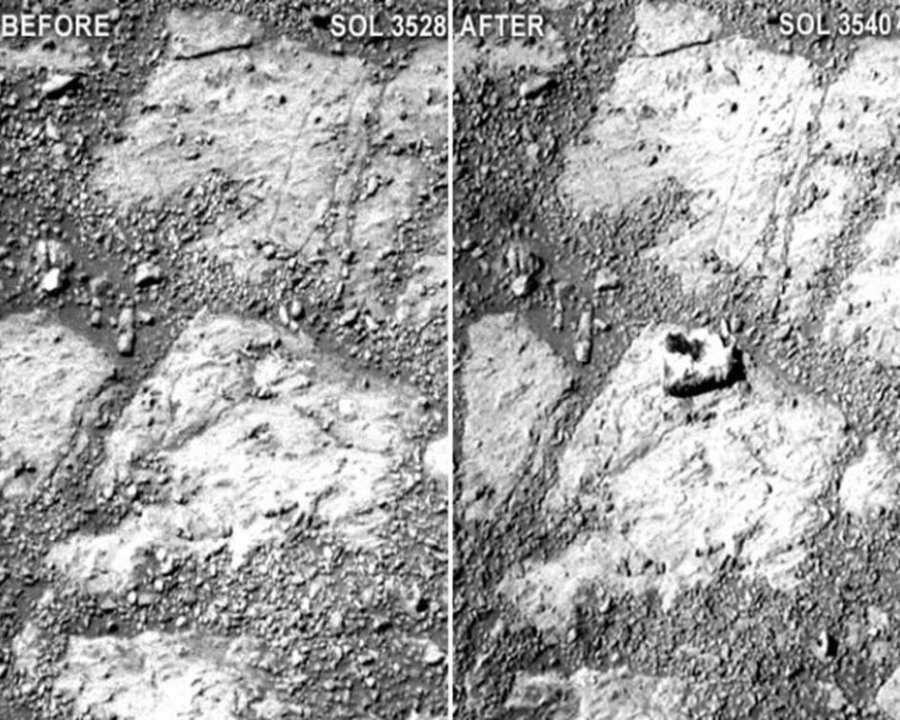
Sudden Appearance Of Object On Mars Caused Much Confusion
One of Mars’ rocks named after NASA engineer who died suddenly
The process of developing a vehicle capable of exploring another planet without a human presence is a complex task. However, the fruits of this labor are the possibility of discovering extraordinary landscapes on another planet. However, there are moments of sadness, as in the case of Jacob Matijevic, who sadly passed away just a few days after the Curiosity rover landed on Mars. Matijevic had played a crucial role in the creation of the rover, which made his loss all the more devastating. In tribute to his memory, NASA has chosen to name a pyramidal rock in his honor. The rock was discovered in Gale Crater in September 2012 and measures around 16 inches wide and almost 10 inches high. It is described as an igneous rock rich in elements coherent with feldspar.
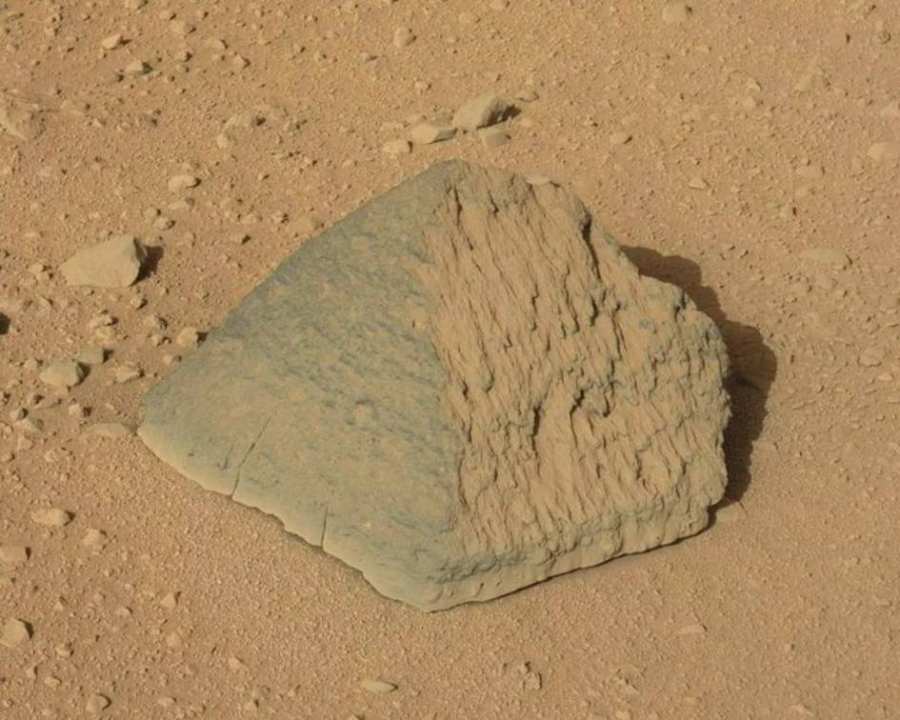
One Of Mars Rocks Named After NASA Engineer Who Died Suddenly
Could it be a squirrel?
For years, we’ve speculated that any form of life on Mars would bear some resemblance to humanoids, at least in terms of size. However, it’s conceivable that the hypothetical Martians might actually be much smaller. They may even resemble creatures we already know on Earth. Is it too bold to suggest that Martians could possibly look like, or even be, squirrels? The question emerges because of the following unusual photo of Mars. In 2012, the Curiosity rover apparently captured an image where you’d think you’d see a squirrel hidden among a collection of rocks. If squirrels lived on the Red Planet, this would be a major scientific discovery. However, despite appearances, as much as it might look like a squirrel, it’s simply a rock.
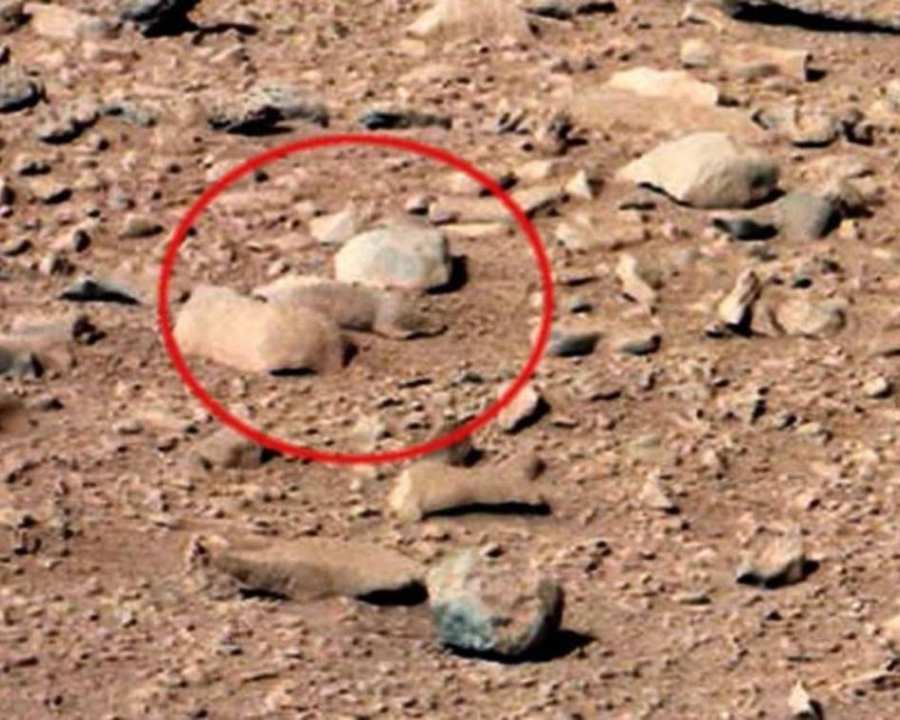
Could This Be A Squirrel?
It looks like plastic waste but it isn’t
When a rover or satellite captures an image on Mars that looks unusual, it’s likely that the explanation is simply a rock with a strange shape. Even if an object appears to be made of a different material, this is unlikely to be the case. But that doesn’t mean it never happens. In fact, one of these strange photos of Mars features an object made of plastic. As is often the case, there was a simple explanation for this. It turned out that the object in the image on the left had apparently fallen off the Curiosity rover that took the photo. Nevertheless, it’s understandable why some people might be puzzled, as the object in the second image also appears to be plastic, when it’s actually a thin flake of rock.
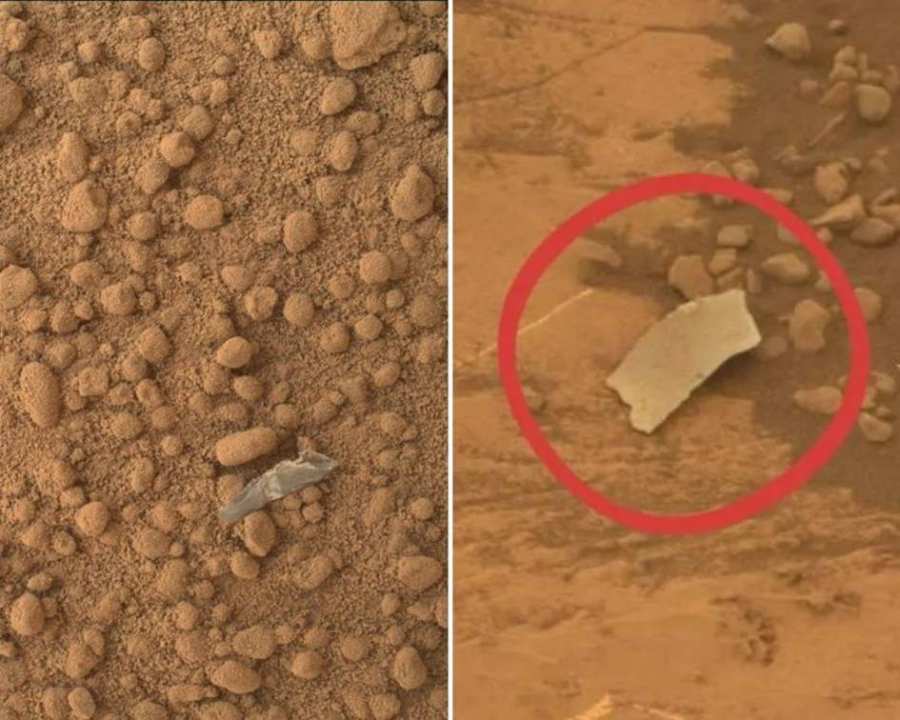
It Looks Like Plastic Waste But It’s Not
Weeds on Mars are just debris
The landscapes of Earth and Mars are markedly different, but there are certain similarities between the two. For example, if we remove color from the equation, our terrestrial deserts are not so far removed from those on the Red Planet. What’s more, it seems that Mars has its own variant of wild plants. This discovery was made by NASA’s Perseverance rover in July 2022, attracting the attention of many observers. According to the team in charge of the rover, it was actually a net that had become detached from the landing site of the Perseverance rover’s entry, descent and landing system.
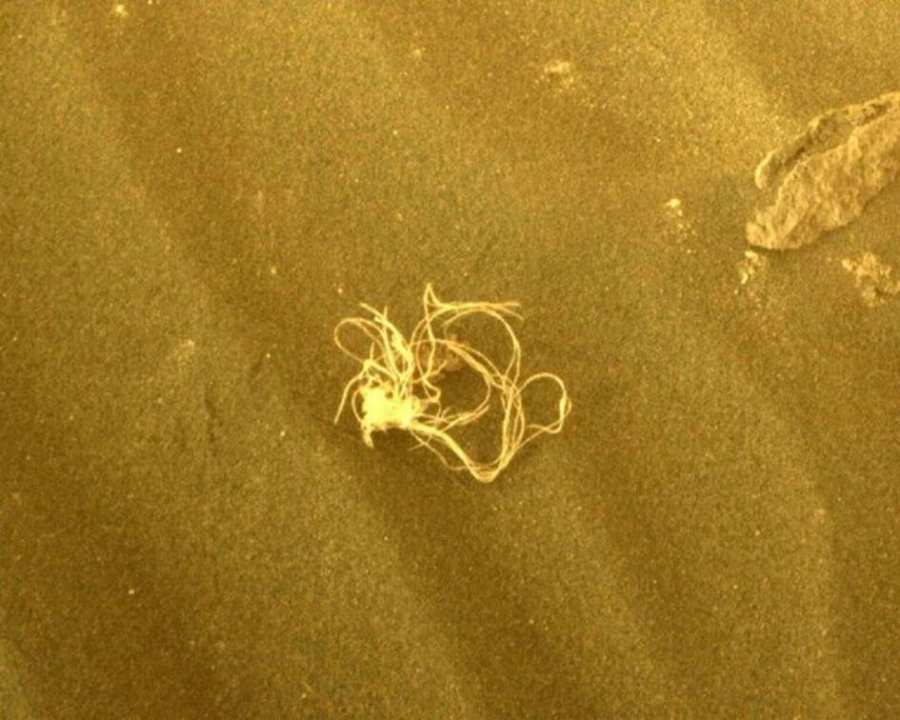
Weeds On Mars Would Only Be Debris
Not far from home
Even the worn-down rocks near where Perseverance landed look like they were wet in the past. The Perseverance’s Mastcam-Z camera took this picture on February 22. It shows a piece of the delta coming up from the crater floor.

Not Far From Home
Even closer
Horgan says that the “crazy red coatings” that are more purple than normal Mars dust are interesting, as are the different textures in the picture. “What kind of rocks are these?” The coats probably mean that water changed them, and the purple color means that they have iron in them, she says.

Even Closer
Volcanic grains?
Igneous, or volcanic, rocks have also been found on the floor of Jezero’s crater. That wasn’t a surprise; views from space showed that volcanic rocks should be there, and scientists hoped to get some to help them figure out how old the rocks really are back on Earth. What we know about the past on Mars right now comes from the sizes of craters and the ages of rocks from the moon, and it’s not very accurate.

Volcanic Grains
First sample attempt
When the rover team tried to drill into that same rock on August 6, it held more shocks. The team was thrilled that the drill went so well. The artificial system that Stack Morgan worked on was one of the most complicated ever made and it worked perfectly the first time. “Oh my god, this is amazing,” they said.

First Sample Attempt
In the wind
In the past, Mars may have had lakes and rivers. Now, the dry, dusty land is mostly shaped by wind (SN: 7/14/20). Perseverance has seen many dust devils and windstorms go through Jezero crater. It is a beautiful example of how landscapes change all the time, even on Mars, which is dry.

In The Wind
Fun Facts About Mars
Now that we have seen some photos, let’s take some time to learn more about this planet. Mars, often referred to as the “Red Planet,” has captured the imagination of scientists and space enthusiasts for centuries. As our neighboring planet, Mars has been the subject of numerous missions, each uncovering new insights into its mysteries. From its unique geological features to its potential for harboring life, Mars continues to be a focal point of exploration and research. Here are ten fascinating facts about Mars that highlight its significance and allure.

Fun Facts About Mars
The Red Hue
One of the most striking features of Mars is its distinctive red color, which comes from iron oxide, or rust, covering its surface. This iron-rich dust gives the planet its characteristic reddish appearance when viewed from Earth.

The Red Hue
Similarities to Earth
Despite its barren and desolate landscape, Mars shares several similarities with Earth. For instance, Mars experiences seasons like Earth, although they are roughly twice as long due to its longer orbit around the sun. Additionally, Mars has polar ice caps made up of water and carbon dioxide, much like Earth’s polar regions.

Similarities To Earth
Olympus Mons
Mars boasts the largest volcano in the solar system – Olympus Mons. This massive shield volcano stands at a towering height of over 13 miles (21 kilometers) and spans a diameter of approximately 370 miles (600 kilometers). It is so large that it would cover the entire state of New Mexico.

Olympus Mons
Tharsis Bulge
Located near Olympus Mons is the Tharsis Bulge, a vast volcanic plateau that covers roughly 25% of the planet’s surface. This region is home to several other prominent volcanoes, including Arsia Mons, Pavonis Mons, and Ascraeus Mons, making it one of the most geologically active areas on Mars.

Tharsis Bulge
Valles Marineris
Often dubbed the “Grand Canyon of Mars,” Valles Marineris is a system of immense canyons stretching over 2,500 miles (4,000 kilometers) long, making it the largest canyon in the solar system. This geological marvel is believed to have formed through a combination of tectonic activity and erosion.

Valles Marineris
Water on Mars
Although Mars is predominantly dry and arid today, evidence suggests that liquid water once flowed on its surface. Scientists have discovered ancient river valleys, lake beds, and minerals that can only form in the presence of water, indicating that Mars may have had a much wetter and potentially habitable past.

Water On Mars
Methane Mystery
Mars has a puzzling presence of methane in its atmosphere, which varies seasonally and geographically. Methane is a potential indicator of biological activity, leading scientists to speculate about its source. While geological processes could produce methane, the possibility of microbial life generating it has sparked considerable interest.

Methane Mystery
Moons of Mars
Mars has two small moons – Phobos and Deimos – which are thought to be captured asteroids. These moons are irregularly shaped and relatively small, with Phobos being the larger of the two. Their origins provide valuable insights into the early history of the solar system.

Moons Of Mars
Dust Storms
Mars is infamous for its planet-wide dust storms, which can engulf the entire surface and last for months. These storms are driven by strong winds that kick up fine dust particles from the surface, creating dramatic atmospheric changes and affecting the planet’s climate.

Dust Storms
Potential for Life
While Mars is currently inhospitable to life as we know it, scientists continue to search for signs of past or present life on the planet. Recent discoveries of organic molecules and liquid water beneath the surface have fueled optimism about the possibility of microbial life existing in Mars’ subsurface environments.

Potential For Life
The Red Planet’s Origins
Scientists believe that Mars formed about 4.6 billion years ago, around the same time as Earth and the other planets in our solar system. Its surface bears evidence of ancient impacts, volcanic activity, and tectonic movements, providing valuable insights into the early history of our solar system.

The Red Planet’s Origins
Closest Approach to Earth
Mars and Earth have a relatively close encounter approximately every 26 months when they align on the same side of the Sun. During this time, Mars appears much brighter in the night sky and is more easily visible to observers on Earth. These favorable conditions often coincide with spacecraft launch windows for missions to Mars.

Closest Approach To Earth
Polar Ice Caps
Mars has permanent polar ice caps composed of water ice and frozen carbon dioxide (dry ice). These caps grow and recede with the changing seasons, much like Earth’s polar ice caps. Studying these polar regions provides valuable information about Mars’ climate and past geological activity.

Polar Ice Caps
The Martian Atmosphere
Despite its thin atmosphere, Mars experiences weather phenomena such as dust storms, clouds, and seasonal changes. The Martian atmosphere is primarily composed of carbon dioxide (95.3%), with traces of nitrogen, argon, and other gases. Its low atmospheric pressure and lack of a robust magnetic field contribute to the planet’s harsh surface conditions.

The Martian Atmosphere
Martian Seasons
Mars experiences seasons similar to Earth, but with longer durations due to its longer orbit around the Sun. These seasons result from the planet’s axial tilt, which is comparable to Earth’s. During its summer in the southern hemisphere, Mars’ polar ice caps shrink, while they expand during its winter.

Martian Seasons
Gale Crater and Mount Sharp
The Gale Crater, located near Mars’ equator, is home to one of the most famous landmarks on the planet – Mount Sharp (Aeolis Mons). This towering mountain rises about 18,000 feet (5,500 meters) above the crater floor and is a prime target for exploration due to its diverse geological layers.

Gale Crater And Mount Sharp
Curiosity Rover Discoveries
NASA’s Curiosity rover, which landed in Gale Crater in 2012, has made numerous groundbreaking discoveries. It has found evidence of past water activity, organic molecules, and complex chemistry indicative of habitable environments in Mars’ ancient past.

Curiosity Rover Discoveries
Martian Dust Devils
Mars experiences frequent dust devils – swirling columns of dust lifted by wind – across its surface. These dust devils can reach heights of several kilometers and play a role in redistributing surface dust and influencing the planet’s weather patterns.

Martian Dust Devils
No Magnetic Field
Unlike Earth, Mars lacks a global magnetic field generated by a liquid metal core. This absence of a protective magnetic field allows solar wind to strip away Mars’ atmosphere over time, contributing to its thin and tenuous atmosphere.

No Magnetic Field
The red planet is certainly amazing, but there’s no denying that our own little blue planet is a wonder of its own! Which is why the next set of images are ones we’ve taken both of our beloved Earth as well as the other amazing things on the outer space taken by the International Space Station!
Taking The Earth For Granted
The Earth is truly majestic but it is not hard to lose sight of that fact because of all the human-made issues (such as political and social strife, war, famine, disease) and natural disasters. We take the planet for granted because we get so caught up with those issues. However, when it is seen through a different perspective…
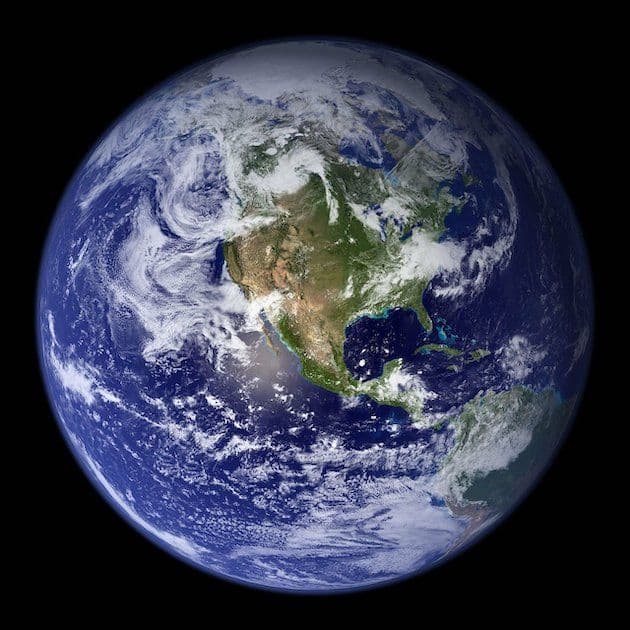
Taking The Earth For Granted
Power And Fragility Of Earth
When the Earth is seen through the ISS cameras’ lens, any potential malaise about the planet is washed away. These heavily detailed images enable us to see the power and fragility that the planet has. The photos also remind us just how small the Earth is when the vast universe is considered.
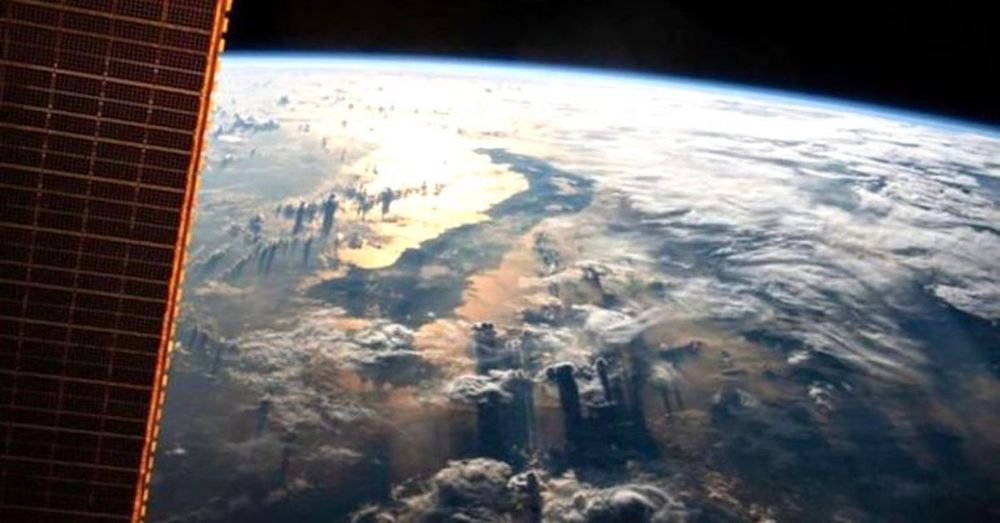
Power And Fragility Of Earth
Human Impact
Aside from natural wonders, other things on Earth can be seen from the International Space Station. It also lets us see the humungous impact, both positive and negative, which humans have on the planet. This image of the Iberian Peninsula shows us that even from space, the electricity which powers our cities is quite visible.
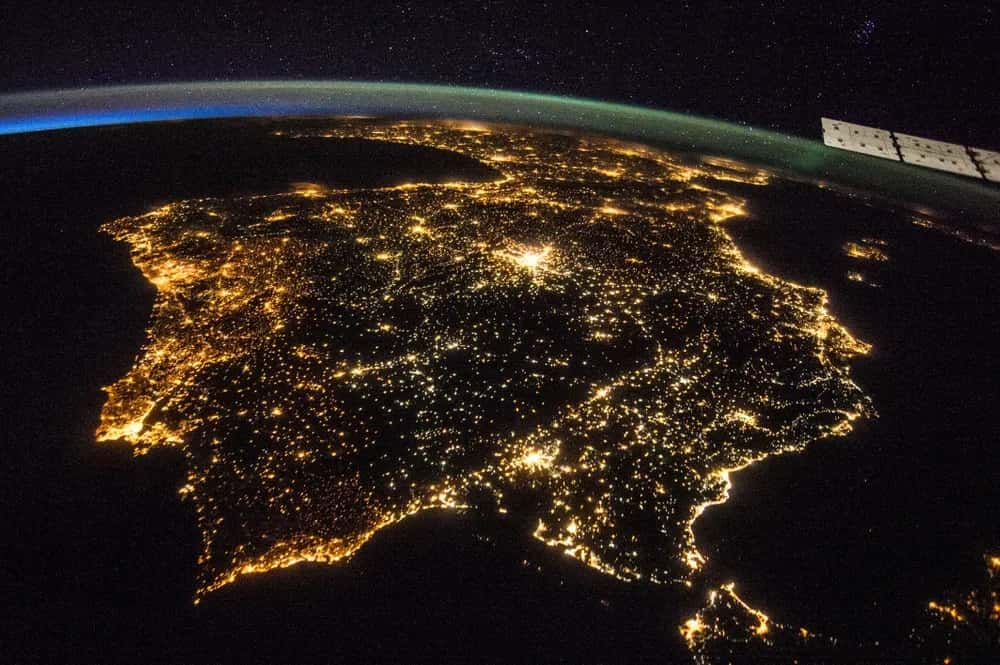
Human Impact
Sunrays On The Sahara
In this amazing image, you can see the Milky Way galaxy in the distance. It is dwarfing the vast Sahara Desert of the Earth in the foreground. Can you see the orange hue around the planet? The sun is reflected off of the orange sand which makes up the Sahara, which has a land area of 3.552 million square miles.
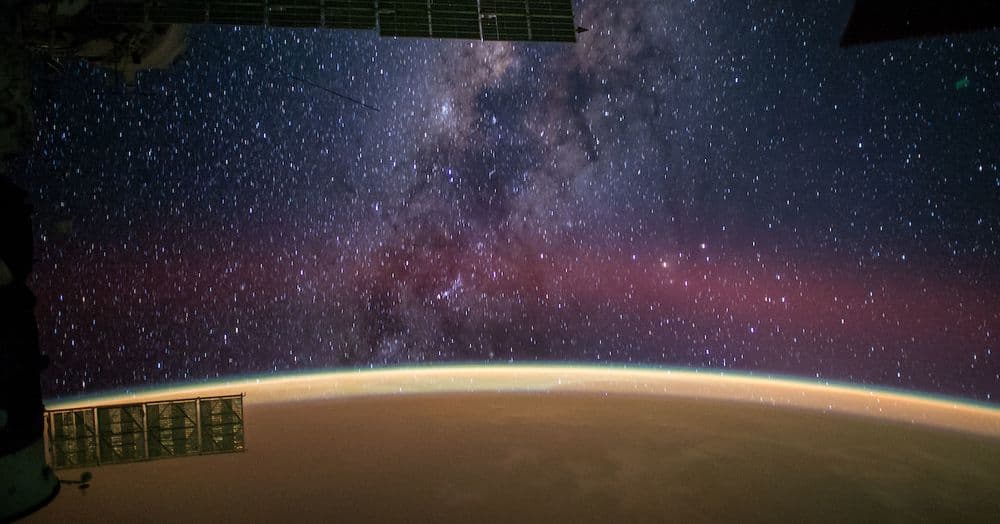
Sunrays On The Sahara
The Northern Lights
The Aurora Borealis, also known as The Northern Lights, is seen here in all its glowing glory. Images of it have been taken from the ground for ages and this gorgeous view perfectly complements them. For all the Simpsons fans out there, there isn’t any evidence that this photo was taken while the ISS astronauts were consuming “steamed hams”, unfortunately.
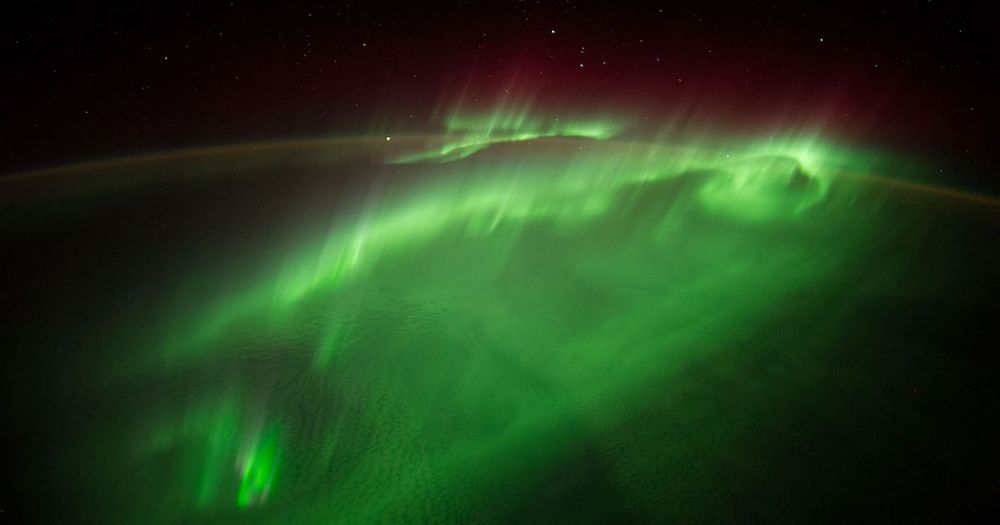
The Northern Lights
Fish Farming
This view of a fish farm on the shores of Northern China shows how much of the natural landscape of the Earth humanity has reshaped.
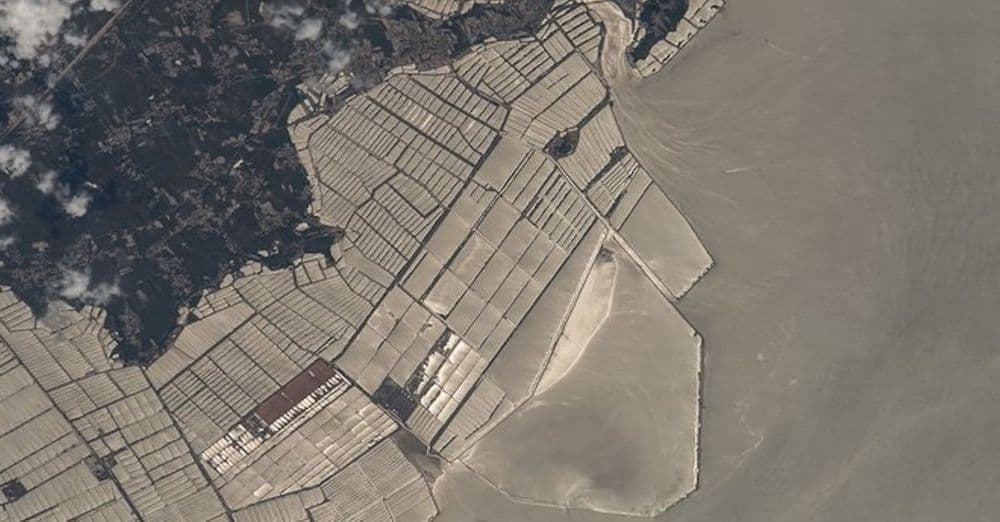
Fish Farming
The Peaks
Many human beings consider the Himalayan Mountains a mythical place since the range includes the planet’s highest mountains. However, when the Himalayas are seen from above, they take on an entirely different look. Criss-crossing streams and rivers make the landscape look more like a tree-root system and less like craggily mountain peaks that we imagine.
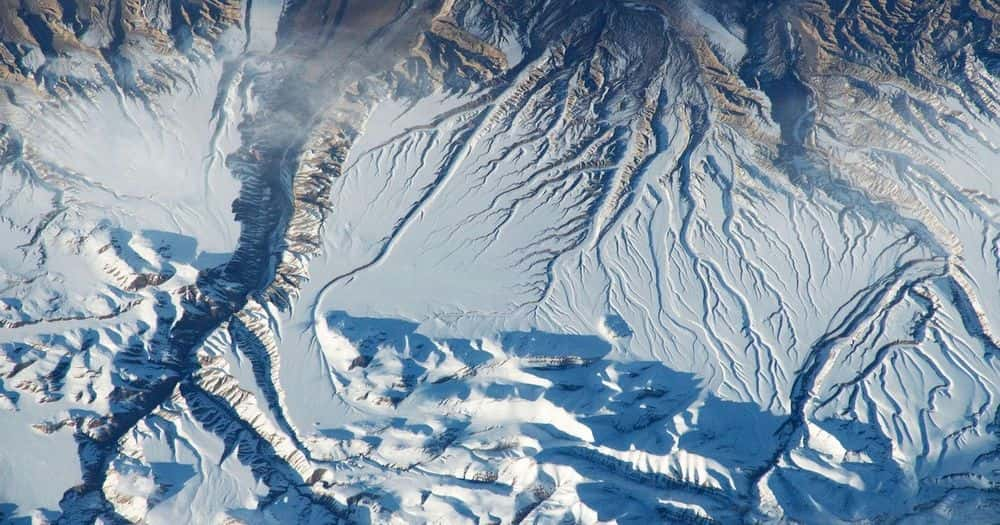
The Peaks
Desert Shot
ISS photos also give a surprising new perspective to deserts on Earth, similar to the Himalayas. This shot of the deserts in Iran looks more like the inside of marble or impressionistic painting. The image does not really show the traditional clichés that come to mind when we hear the word desert.
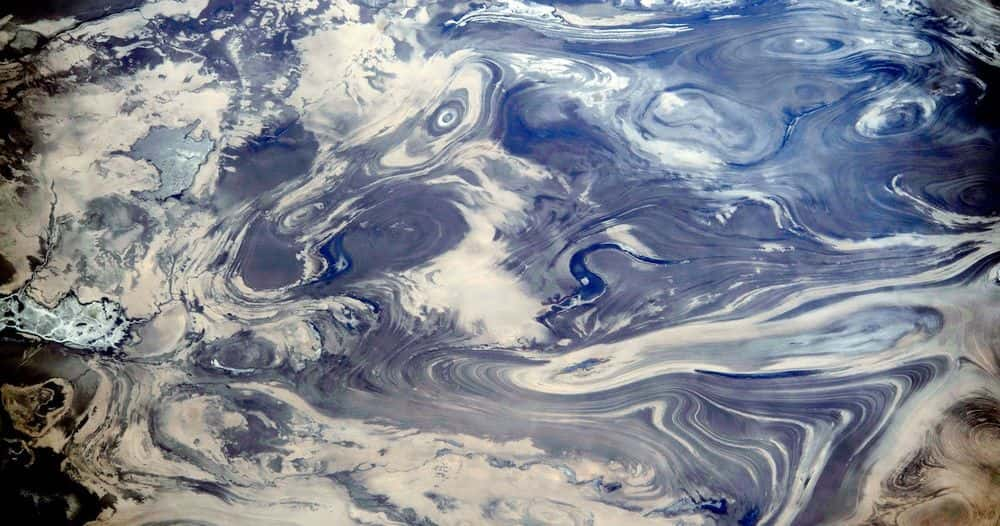
Desert Shot
The Reef Seen From Above
Here’s another of the natural wonders of the Earth as seen from above: the Great Barrier Reef in Australia. The reef is stunning from above and down below. However, not all images captured from the cameras of the ISS have been as gorgeous. As a matter of fact, some have been quite terrifying.

The Reef Seen From Above
The Volcano At Yellowstone
According to the USGS monitoring services, approximately 170 tremors were detected around Yellowstone in June 2020. While all the tremors were small and it seems they would not have any effect on the volcano, that’s exactly what scientists are concerned about. The largest was a magnitude 3.1 on May 29th, and experts believe its not necessarily the earthquake’s size but rather the quantity which might actually cause a volcanic eruption. So far, 2020 has been a nightmare, and then we get news like this!
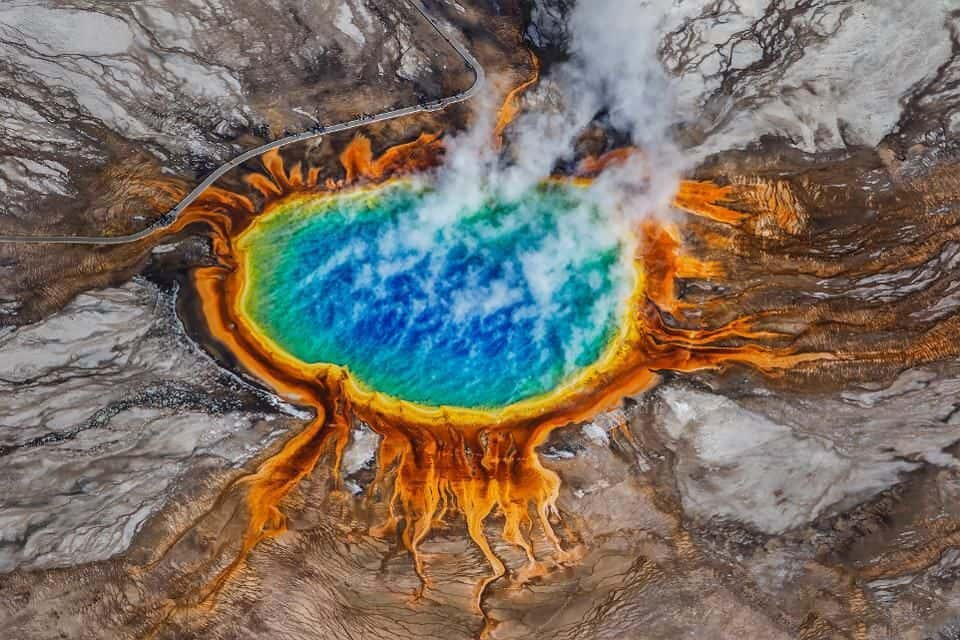
The Volcano At Yellowstone
Nature’s Fury
The cameras of the International Space Station have captured not only nature’s beauty but also its fury. In this harrowing image from the year 2003, we can see the massive Hurricane Isabel hitting America’s East Coast.
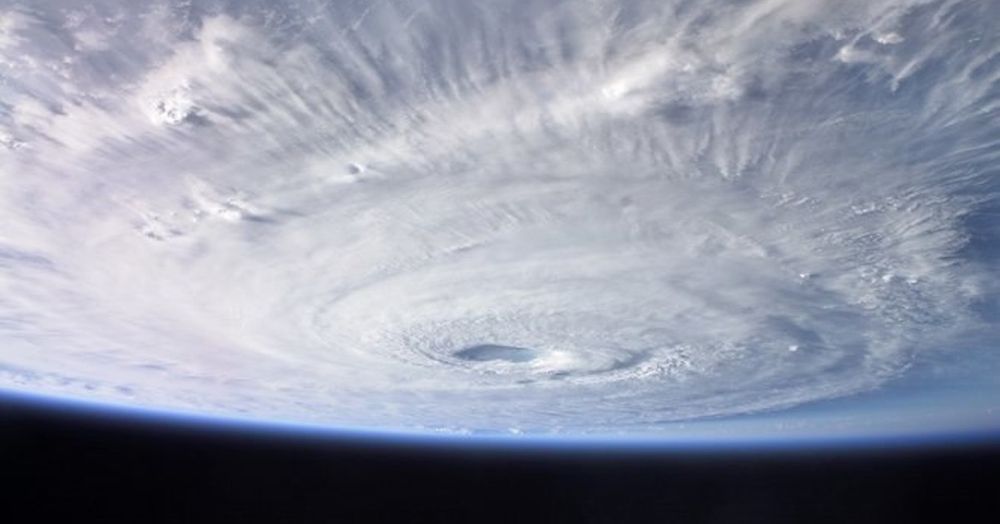
Nature’s Fury
Massive Flooding
The ISS was able to take photos of this massive flooding in Thailand’s Mekong River after a Tsunami. The images are useful since they were shared with recovery and relief organizations that can use them to see the extent of the damage and plan on how to allocate rescue resources.
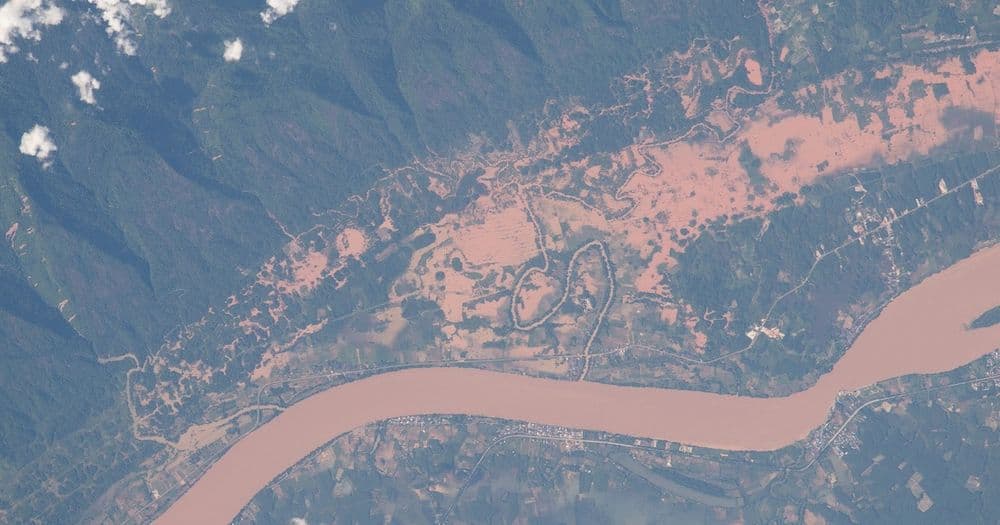
Massive Flooding
A Strange Phenomenon
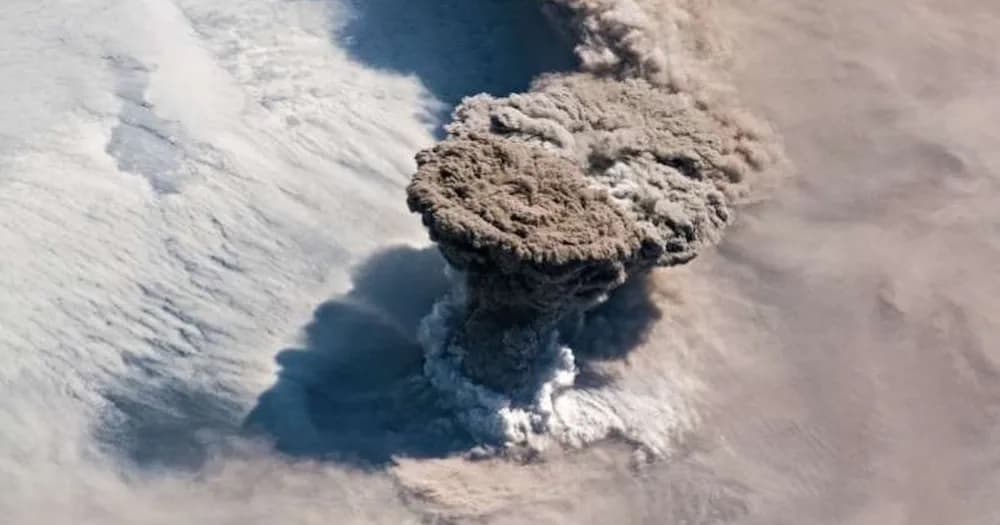
By 2019, the capability of the station to take incredible photos has become well-known. That year, however, the then-current ISS crew did more than just come upon a pretty photo: They actually solved a mystery. The crew noticed the strange phenomenon, which is pictured above, and were understandably mystified.
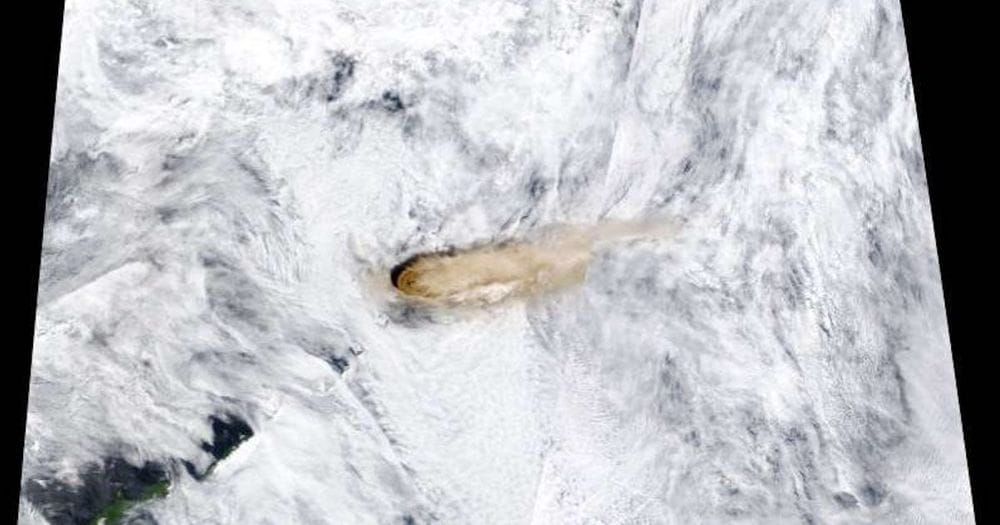
A Strange Phenomenon
The Reveal
The astronauts thought hard about what exactly they were looking at… until the station’s orbit allowed them to get a clearer look. It was a massive erupting volcano! In the harrowing image, the immense power of an eruption can be seen. Few other photos have ever shown something like this.
The Reveal
A Potential Threat
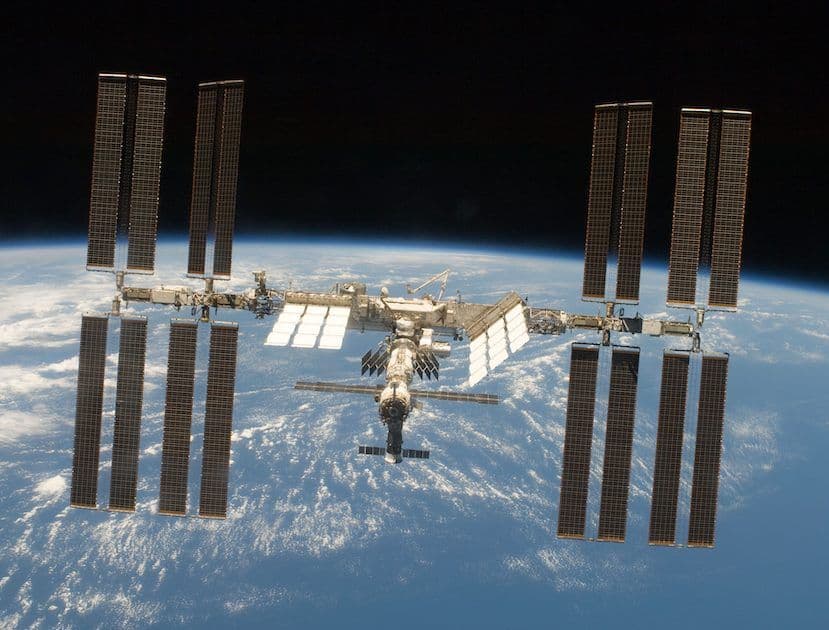
The volcanic eruption may have been a false alarm in the “lives in danger” kind of way, but the International Space Station is being used by NASA to watch out for any threats coming from outer space. Not extraterrestrials, of course. At least, that is what we know. NASA is looking out for asteroids and other debris from space which could potentially endanger Earth.
A Potential Threat
Volcano On An Uninhabited Island
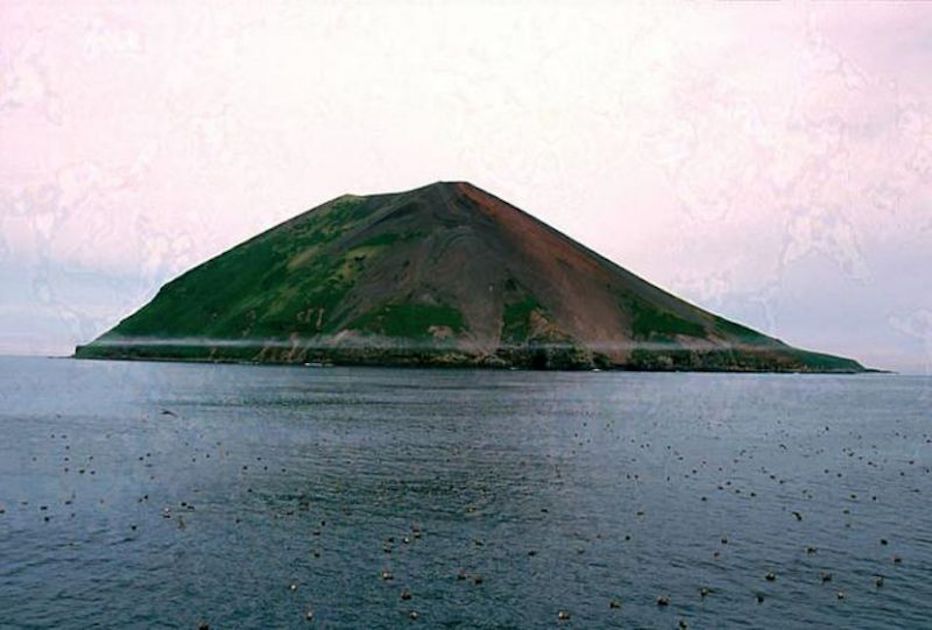
The ISS quickly contacted authorities and reported the eruption, with the hope of saving anyone in the path of the volcano. Thankfully, it was the Raikoke volcano that erupted, and it is located on an island in Japan that is uninhabited. There were no casualties, just awesome photographs.
Volcano On An Uninhabited Island
Planetary Defense Officer
Lindley Johnson is a 20+ year Air Force veteran who joined NASA in 2003. In the almost decade and a half since he has led NASA’s team assigned to developing responses for different “doomsday” scenarios. His title, Planetary Defense Officer, is ridiculously cool!

Planetary Defense Officer
Biggest Doomsday Scenario
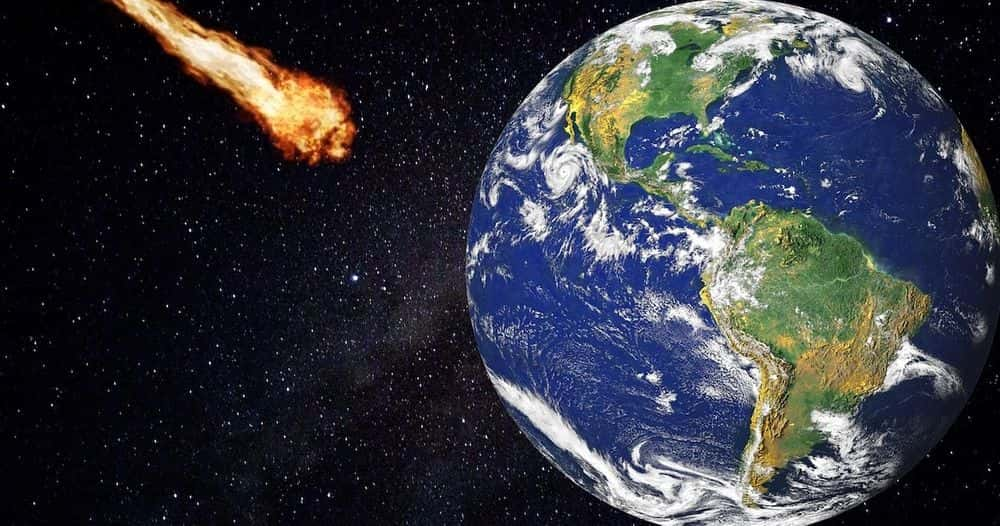
If you are wondering about the biggest doomsday scenario that Johnson and his team worry about, it is asteroids. Film buffs would be pleased to know that NASA actually has a team who is dedicated to making preparations for the plots of Deep Impact and Armageddon coming to life.
Biggest Doomsday Scenario
High-Powered Cameras
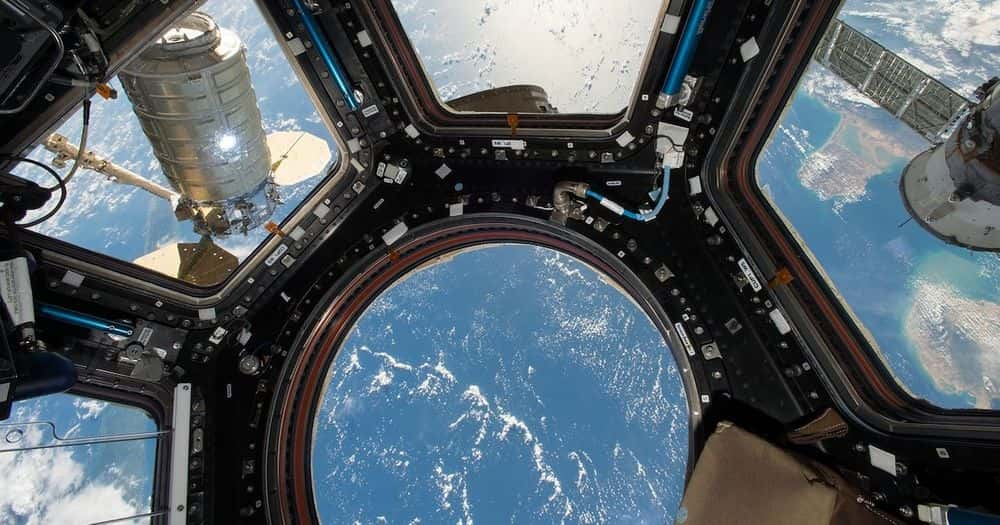
These breathtaking photos are taken with the use of high-powered cameras which are mounted internally and externally on the modules of the station. This equipment has captured some truly remarkable images that highlight the natural wonders of the planet.
High-Powered Cameras
Conducting Simulations
Asteroid impacts in areas like New York City have been simulated by Johnson and his team to gauge preparedness and identify what resources would be needed to mitigate the damage. This makes a lot of sense because some asteroids larger than three football fields have passed dangerously close to Earth.

Conducting Simulations
Crater Sites
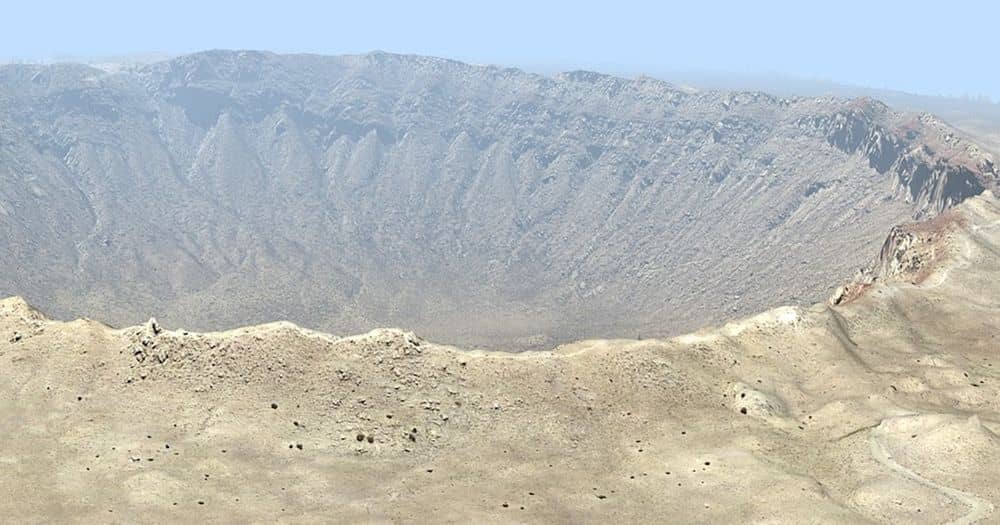
In addition, the team visits crater sites all over the world in order to study the effects of asteroid impacts on the surrounding environment. Looking at that devastation, it is not hard to see why NASA’s overall mission statement specifically includes the work Johnson and his team do.
Crater Sites
No Landing
This research may be very real, but it’s highly unlikely NASA would actually attempt to land a crew on an incoming asteroid-like how Bruce Willis and company do in Armageddon. What they would rather try to do is use kinetic impactors. Apparently, the “unmanned spacecraft would crash into an asteroid at high speed, thus deflecting it away from our planet.”

No Landing